Salty Sam’s Fun Blog for Children
Number 575
The Farmland Trees
Hello Everyone
A lot of children nowadays worry about the future of the world.
They worry about the environment.
The children in Miss Pringle’s class certainly do.
The government promised to support schemes that plan to plant millions of trees some while back, but of course millions of people can plant just one tree in odd corners here and there. We all share this planet and it is important to all of us.
Bill and Bob have done plenty of tree planting themselves these last few years, with help from their family.
Miss Pringle started a new class project of her own last autumn.
Her children had grown trees before to plant in the margins of the school grounds – but this project was going to be much bigger.
Her class went out in a group to collect some tree seeds last autumn; you probably remember me telling you about that, and then she contacted some local farmers to see whether they would allow her children to plant the trees they were going to grow from the seeds on their land.
The seeds were bagged up into paper bags to be stored in Miss Pringle’s shed over the winter. They would be kept cool – well very cold on some days actually, but they were in the dry.
The bags had all been carefully labelled and that was a job the children could help with.
Then three weeks ago, Miss Pringle brought the seeds back into the classroom to be planted up in seed trays.
They were left on the classroom window sills so that they could get plenty of light. They had collected trees from the local are so that they would grow well in the local area.
(You need to select the right plants in order for them to do well in any area. This is true anywhere in the world.
ln some colder places, only conifers will grow. ln some hot places, only desert plants like cactus will grow.)
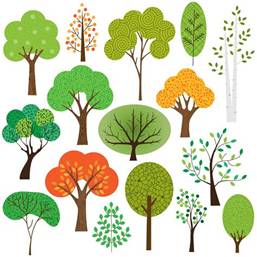
The trees the children planted were broadleaf trees.
There needed to be watertight trays underneath the seed trays with holes in them and plenty of newspaper on top of the window sills too so that when the seeds were watered the water did not go all over the classroom as well!
There were so many trays that they had to be put onto table tops at the back of the classroom too.
The children could keep an eye on their seedlings and make sure they had enough water to drink.
Every week, the children are having a potting up session. Many little hands make light work of taking any seeds that have sprouted and putting them into pots of compost.
Miss Pringle showed the children how you should very lightly hold one of the seedlings leaves and not the stem in case you break anything with your fingers or nails. A tiny plant can withstand some damage to its leaves, but not its stem.
All winter, the children have been collecting pots that have had yoghurt and salads like coleslaw in them (that were bought in the supermarket). They washed them out carefully and brought them in to be used as free plant pots.
Some children even took the initiative and collected some seeds from their own garden that they thought would grow into trees that would be suitable to grow on farmland.
There are cherries, apples, pears and plums.
Birds like eating cherries, deer like to eat apples and badgers eat lots of different kinds of fruit.
These trees can be slotted into hedgerows along with the hawthorn trees that already grow there.
The pots of trees are being lined up in the playground against a fence so that they can prop each other up if it gets a bit windy. The pots are jammed in together tightly and will eventually form a big square.
Every week, the little forest of pots gets bigger.
The children are very proud of all the work they have done.
The trees will be happy living outside because that is their natural home.
They may need watering if there is no rain for a while.
Then they will be potted up into larger pots as they grow.
So far they are doing very well.
The little trees will be ready to be planted out in a couple for years. At this stage of their life they are called whips.
They will be planted into hedgerows, into the corners of field and if they are planted into grass they will need to be mulched so that the grass does not choke them.
ln the countryside, you need both large trees and hedgerows because both are beneficial in their own way and increase biodiversity.
lf trees are planted into pasture land and animals walk amongst them. This is called silvopasture.
As long as the right types of trees are planted, trees can be very beneficial to livestock.
They can rub up against them and this helps them maintain their skin and coat.
They can shelter under them in the cold and rain.
The trees help soak up rain, making it less likely that grassland turns to mud.
The animals can graze on the pasture grass and browse on the leaves of the trees planted in the pasture. Tree leaves can be a good source of nutrition and sometimes even have medicinal effects. They have lots of minerals in them.
Some people in the world of course have even larger tree-planting projects than the Rocky Bay Primary School.
They have large tracts of land that they want to cover with trees.
Sometimes, this is after loggers have taken a plantation of timber and the foresters want to grow a new crop.
They can employ new technology to do this.
They can use robots to plant trees. These are like small carts that trundle over rough terrain pushing tiny whips into the ground.
They sometimes use drones to do the hard work.
They use drones to plant trees on any kind of landscape.
Firstly, they map out the terrain using computer software. There will be a 3D model of the land they want to plant up.
Then a drone is allocated to each section and programmed – that is to say it is told what to do. This way several drones can work away at the same time and not crash into each other.
The drones can be enormous – about the size of a park bench.
They have legs to land on in their corners, and a centre section contains hoppers full of seeds.
The hoppers are long, square-shaped boxes that fit together.
At the bottom, they have a mechanism that shoots seeds out with the velocity of a bullet from a gun. This force is so strong that the seeds actually get shot right into the ground. A few seeds might be shot out at the same time allowing for the fact that not all seeds will grow.
Using drones, landowners can plant up a large section of ground very quickly. Each drone can plant nearly one million seeds in a week.
The landowners probably don’t own the drones themselves. They might hire people in to do the job for them. These people own the drones and have the expertise to operate them.
Then they will move on to another place to help out another landowner.
The drones need to be filled up with seeds again when the hoppers are empty; but otherwise they can cover huge tracts of land in a fraction of the time that it would take people to do the same job.
Drones are especially useful working on slopes that would be awkward to access on foot – especially when wet and slippery.
The drones could be used to plant up any kind of forest. lt doesn’t have to be a plantation of timber grown for commercial purposes.
New forests can be planted up quickly after forest fires have whipped through. Scientists tell us forest fires in recent years have come about because of global warming.
Some countries employ a more low-tech approach by dropping seed bombs from aeroplanes or even hang-gliders. The seed bombs are made by covering seeds in charcoal that will dissolve in rain.
The planet needs more trees!
Bye bye everyone – don’t forget to subscribe to my blog!
Love and kisses
Salty Sam

www.christina-sinclair.com
Bill and Bob’s Joke of the Week
Bill: What did one balloon say to the other as they crossed the desert?
Bob: l don’t know. What did one balloon say to the other as they crossed the desert?
Bill: Oh look! There’s a spiny cactussssssssssssss!
Salty Sam © Christina Sinclair 2015
Unauthorized use and/or duplication of material from this blog without express and written permission from this blog’s author and owner is strictly prohibited.
Links may be used to www.christina-sinclair.com

Picture Gallery
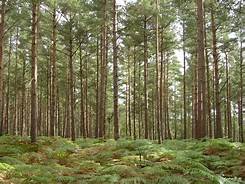
Timber plantation

Broadleaf trees

Silvopasture
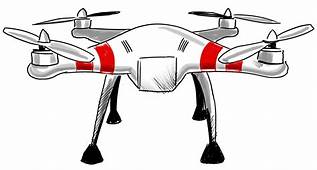
Drones can carry cameras, parcels and now tree planting equipment
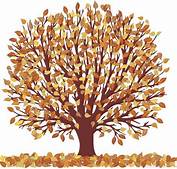
Decaying leaves are a good soil conditioner

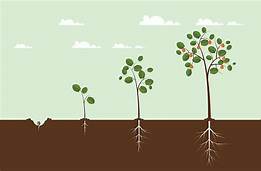
A seedling
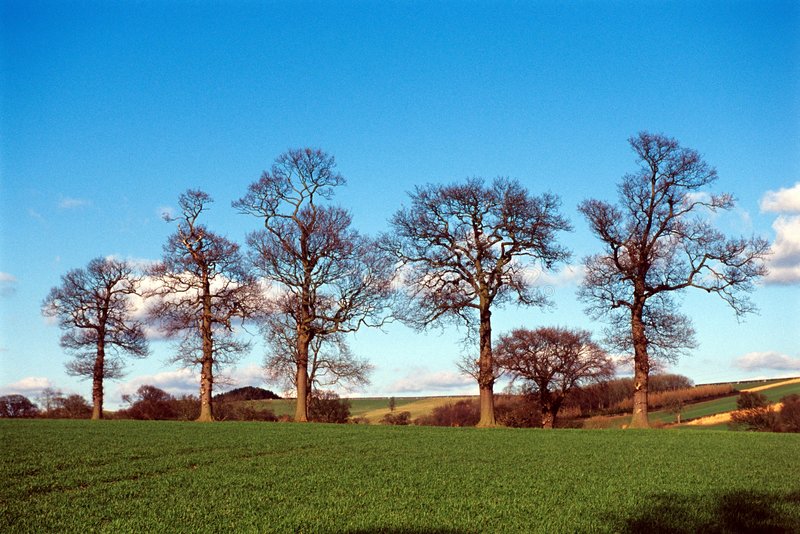
Oak trees
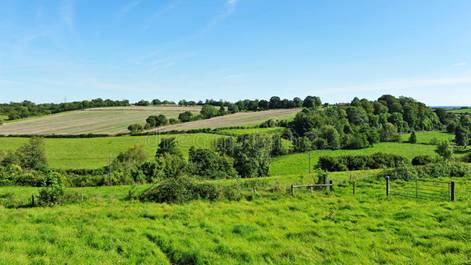
Hedgerows
 THE SALTY SAM NEWS DESK

Farmer Jenkins had a bit of an accident last week. He twisted his ankle and was not able to walk.
Captain Jack and l went up to his farm to see if we could help him with any of the jobs he couldn’t manage to do.
By the time we got up there, his wife had seen to some of them, but he asked us if we could distribute some wild bird seed along the side one of the hedgerows on his farm.
In the middle of the winter, Farmer Jenkins feeds the wild birds on his farm three times a week with wild bird seed to keep them well-fed at a time when there isn’t much other food around to eat.
This time is called the hunger gap.
We just had to carry a big sack along the side of the hedge and let the seed drain out of a hole we made in the corner until the whole bag was empty.
It was a lot of fun actually!
Lots of birds live in the hedge and just nip down to have a quick snack.
They like the food to be near the hedge rather than out in the middle of the field because they feel safer being near cover.
Because Farmer Jenkins has been feeding the wild birds on his farm like this over a few winters now, he has lots of birds living in his hedgerows.
He has blackbirds, sparrows, dunnocks, chaffinches, yellow hammers and lots of different kinds of tits too.
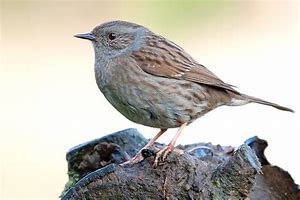
Dunnocks have lovely singing voices
If there is enough food for animals to eat, they feel able to start families in the spring and raise their numbers.
Bird numbers dropped by millions and millions on farmland over the past few decades, but recently farmers have tried to encourage the numbers to grow.
We offered to go back again to help a few days later to give Farmer Jenkins a little more time to get better.

*********************
*********************
 Quick Quiz
Can you answer these questions?
- Which tree is featured on the flag of Lebanon?
- What is the seed of an oak tree called?
- What type of tree produces dates and coconuts?
- Which trees are thought of as the biggest single standing trees in the world?
- Which fruit was associated with Henry Vlll’s first wife Catherine of Aragon?
- Which blossoming trees is Japan famous for?
- Which tree found around the Mediterranean can grow to a great age and produces fruits that can be eaten or processed into oil?
- Which European tree produces seeds called masts?
- Which trees are grown to produce cider?
- Which tree roots do fairies traditionally live in?



lt’s the Weekend!
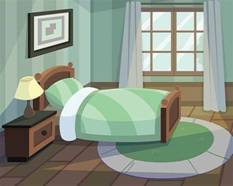
HOW TO MAKE A BEDROOM PLAN
Of course, Farmer Jenkins has lots of room on his farm because he has so much land.
Not all of us are that lucky,
If you are not happy with the way your bedroom is organized, you may want to move things around a bit.
Maybe your head is too near a draught, or you would have more space to play if your bed was moved over a little.
Maybe if you had shelves on the wall you could get your toys off the floor.
If you want to try out different ideas, there is a quicker way that moving furniture about – make a plan on paper!
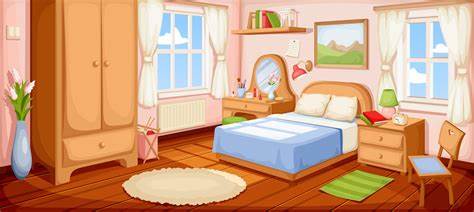
First, you need to measure the walls so that you know how big the room is.
You may want to use squared paper to help you draw your room to scale.
Then you need to measure your furniture and cut out shapes to represent these items – everything must be to scale.
You can move the paper shapes around inside the room with no effort at all to see what could fit where.
Don’t forget that you need to get around the bed to make it.
You need to get in the door and get to the window to open it.
You need enough room to open cupboard doors and drawers of chests.
No shelf should have a sharp corner sticking out so that a person could hit their head on it.
If you live in a country where the winters get cold, you probably don’t want the top of your bed under a window.
You may want a comfortable place to study and store your pens and books.
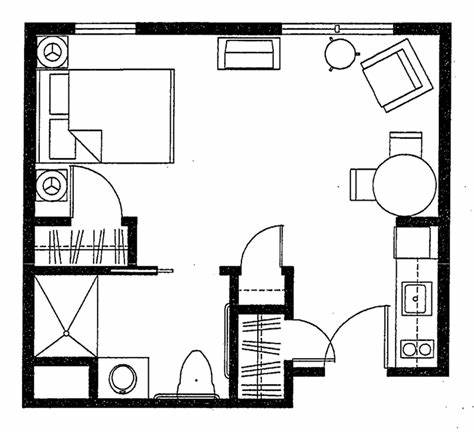
Look at the room plan here. Look how an architect draws walls, windows and doors. The curved lines show how the edge of a door sweeps across the floor.
Can you identify the bed, bedside lamps, chairs, tables, toilet, shower and basin? What else can you identify? Can you see the coat hangers in the wardrobes?
Please note that the material on this blog is for personal use and for use in classrooms only.
It is a copyright infringement and, therefore, illegal under international law to sell items made with these patterns.
Use of the toys and projects is at your own risk.
©Christina Sinclair Designs 2015
Quick Quiz Answers
- Which tree is featured on the flag of Lebanon? – Lebanon cedar
- What is the seed of an oak tree called? – acorn
- What type of tree produces dates and coconuts? – palms
- Which trees are thought of as the biggest single standing trees in the world and typically live on the Western coast of North America? – Giant Redwood
- Which fruit was associated with Henry Vlll’s first wife Catherine of Aragon (she came from Spain)? – pomegranate
- Which blossoming trees is Japan famous for? -– cherry
- Which tree found around the Mediterranean can grow to a great age and produces fruits that can be eaten or processed into oil? – olive
- Which European tree produces seeds called masts? – beech
- Which trees are grown to produce cider? – apple
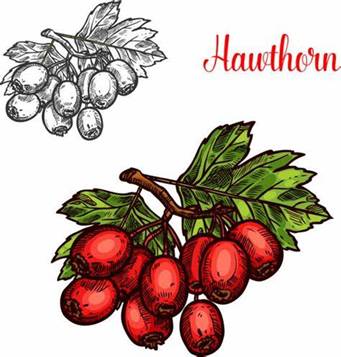
- Which tree roots do fairies traditionally live in? – hawthorn

Beech seeds