
Salty Sam’s Fun Blog for Children
Number 585
Capability Brown
Hello Everyone

As summer comes upon us, families often start planning days out, and one of the cheapest ways to get a small break out in the fresh air is to go out for a picnic.
Of course, the ideal place for a picnic is a beautiful place to sit, either on a blanket or even some camp chairs.
You might go to a local park or the seaside.
You may pick a place where you will be surrounded by beautiful countryside.
And people have loved to walk and picnic in beautiful surroundings for hundreds of years.
There are many stately homes around the country that have had their surroundings designed to be an idealized version of nature.
ln other words, it looks manicured and polished, rather than rough and ready.
One of the most famous landscape designers was Capability Brown.
He was what we call a landscape architect.
He has been referred to as England’s ‘greatest gardener’.
“So how can anyone have the name Capability?” l hear you ask.
Well, he wasn’t given the name as a baby; he acquired it as a nickname later in his life. The name his parents gave him was Lancelot.
He became known as Capability because he habitually told his clients (the people he was working for) that their gardens and surrounding land had great capability for improvement.
He was obviously good at selling himself; and his talents!
His signature style was to create rolling grassland, dotted with mature trees.
There were also winding rivers and large lakes that were created by damming the rivers in a way that the water was held back so it flooded into enormous pools.
And there were picturesque bridges and follies to happen upon as you walked, rode your horse or travelled in your carriage. A new vista could open up to you as you moved through the landscape and rounded a group of carefully positioned trees.
The first job was always to clear away formal gardens so that the views from the house could be opened up. This gave the feeling of ownership of the land as far as the eye could see while you were in the house.
lt was also a way of showing off possession of wealth to visitors, as the vast tracts of land around the house linked to it in a more obvious way.
Capability Brown’s design style became very fashionable, and was much in demand.
His talents made him rich.
He designed about 250 gardens around Britain. Many of them around large historical houses that people can visit today.
These parklands are so big they would take a long time to walk around.
lt is not a design style for most gardens!
Brown became, in his 30 year career through the mid-1700s, what we would think of today as a multi-millionaire, and yet he had very humble beginnings.
He was born in Northumberland in the far north of England, the fifth child of a land agent and a chambermaid.
He went to school until he was 16, and then started work as a head gardener’s apprentice. He left this job when he was 23.
After taking on other gardening jobs, he became under-gardener at Stowe in Buckinghamshire, where he worked under William Kent. He was one of the founders of the new English style of landscape garden.
This is when Brown started getting practical experience in garden design.
He must have been a good learner and a hard-worker.
ln 1742, at the age of only 26, he became Head Gardener.
Of course all the work in those days had to be done by manual labour. That meant that strong men moved things and planted things, and shifted and moulded ground by using hand tools rather than heavy machinery.
But Capability Brown had big ambitions as he worked on his projects and wanted very large, mature trees planted. He did not want to wait for saplings to grow. He needed a contraption to help him do this.
He and his men used a manoeuvrable horse-draw cart to transport these large trees to the site where they were to be planted. Then they were able to tip the tree into a pre-prepared hole and flip it into an upright position! lt was a clever innovation of the day.
Brown’s signature trees were: oaks, elms and cedars.
All of these trees grow to be very big, and look very stately.
They make an impact in a large landscape.
Many elm trees were lost to Dutch elm disease in the middle of the 20th century; a disease imported from North America on some infected logs – but new strains of disease resistant trees have been developed and elms are being planted again.
Capability Brown’s style of moulding landscapes to look magnificent is still very popular today, and people who have inherited his work try to maintain his creations for the generations that will follow us.
They maintain the trees and landscapes making sure everything is kept neat and tidy, and new planting is carried out if required.
Bye bye everyone – don’t forget to subscribe to my blog!
Love and kisses
Salty Sam

www.christina-sinclair.com

Bill and Bob’s Joke of the Week
Bill: Can you give me 50p?
Bob: l will give you the money, not because you need it, but because it will make me feel good.
Bill: Then why don’t you give me £10 and really enjoy yourself!
Salty Sam © Christina Sinclair 2015
Unauthorized use and/or duplication of material from this blog without express and written permission from this blog’s author and owner is strictly prohibited.
Links may be used to www.christina-sinclair.com

Picture Gallery

Stourhead
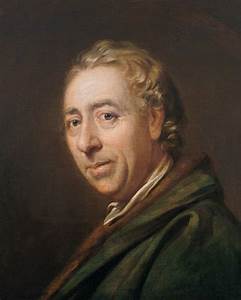
Capability Brown

Mature trees can be very large
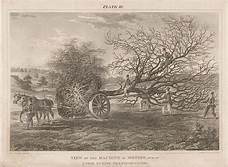
Moving large trees
 THE SALTY SAM NEWS DESK

This week Bill, Bob, Emily, Henry and I went for a walk in the Rocky Bay Woods.

It was a lot less cold and muddy in there than it was a few weeks ago, and the new leaves were greening up the trees fast.
The woods are clearly full of wildlife because we could hear it.
The bird song around us was very loud. It is at this time of year.
The strange thing was that it was difficult to spot any birds; most of them are small and hidden by leaves or branches. You often couldn’t see them even though you knew they were just above you somewhere because you could hear them singing.
There were blue tits and sparrows and a robin’s song is easy to recognize; it is a very sweet melody.
Bill was the first to notice the knocking of a woodpecker that was some way off. It is an unmistakable rapping sound – almost eerie at a distance.

There were wood pigeons too and blackbirds.
Sometimes it seemed like the birds said words like ‘inspire’ or ‘pinkachoo’.
Sometimes it seemed like they were uttering whole sentences but in a foreign language that you couldn’t understand.
A great tit sounds a bit like a saw working its way through a plank.
Sometimes we heard a faint, breathy bark. That wasn’t a bird; it was a squirrel. They are out and about and busier than they are on cold winter days.
And the birds were scratching about on the ground looking for food and nesting materials.

There were lots of flowers blooming too. A hawthorn here and there was bursting into blossom; the flowers start as tiny, white balls.
There were lots of buttercups, dandelions and cow parley at the margins of the woods and the garlic mustard seemed to like to line the pathways. There were some sparrows trying to extract some seeds from a few sticks of stiff, dried grass and the bees were busy in the green alkanet.

Because the Rocky Bay Woods are wildwood, that means it has been untouched woodland since the last Ice Age, there has been time for many species of flowers to establish themselves across the shady, woodland floor.
The bluebell is the most noticeable species at this time of year, creating a mauve mist of colour as far as the eye can see, with the very occasional white blue bell in the middle of them.
But you can also find Yellow Archangels, also called dead nettles because they look like stinging nettles with yellow flowers, but they don’t sting, greater stitchwort which is very pretty growing amongst the bluebells, the white flowers of wood anemone and yellow flowers of celandines.
You could hear the buzz of the odd bumble bee working its way across the mass of flowers.
You are not allowed to pick wild flowers, but of course you can photograph them.

Garlic mustard
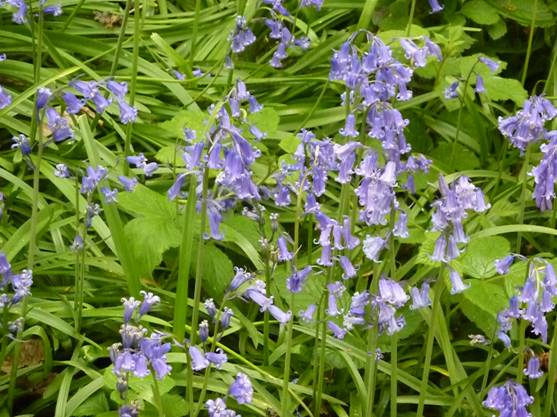
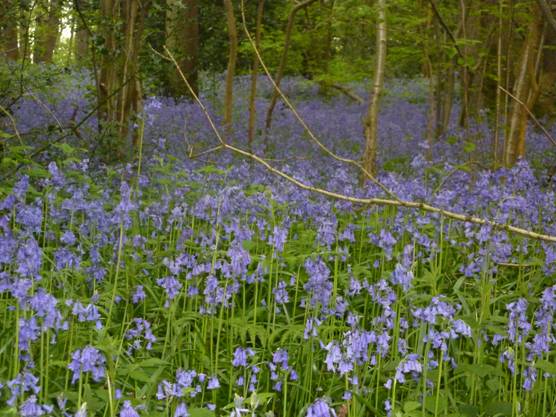
Bluebells

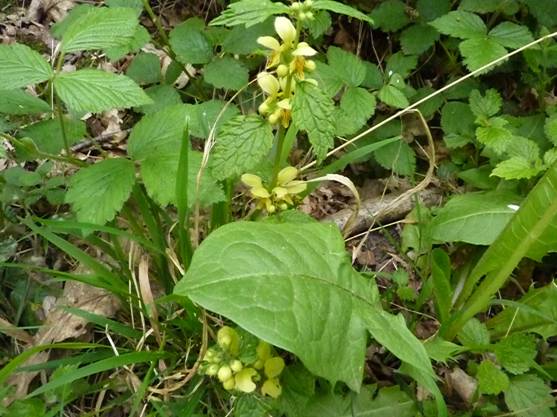

Yellow archangels

Greater stitchwort
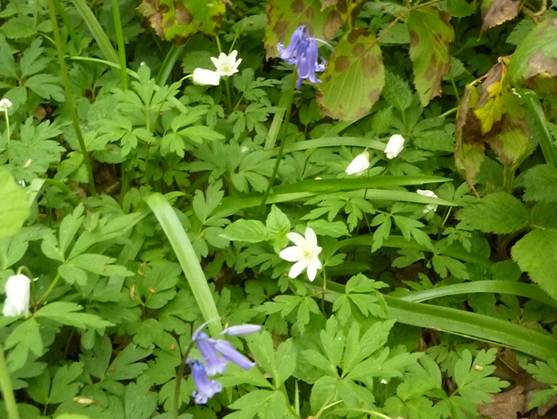
Wood anemone

Celandines

Wild geranium
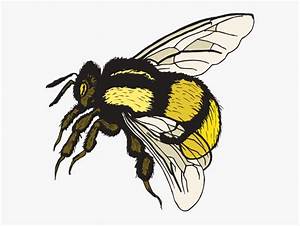
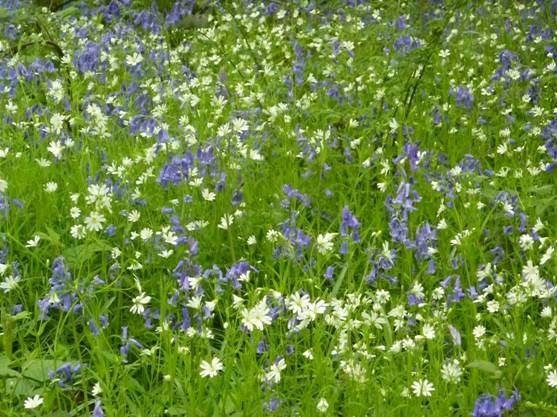
The woods have designed themselves for the most part, and the trees there are in all stages of their life; some are decaying away, some are in their prime, and there are small saplings which have planted themselves. The top canopy was high above our heads.
Some of the saplings have been planted by the people of Rocky Bay though, just to fill in some gaps and give nature a bit of a helping hand.
Although glades in a wood land are helpful; they let air and light in to the heart of the wood.
We checked out some of the trees we have planted and they seem to be doing fine. Decaying leaves from last autumn keep moisture in the soil which helps young trees.

Then, oh dear! Emily fell over and twisted her ankle.
I was her hero and gave her a piggy back to Auntie Alice’s cottage, which as you know is at the edge of the wood.
Salty Sam to the rescue!
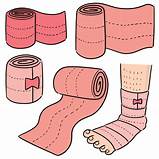
There she was patched up with a long, crepe bandage and a large mug of hot chocolate.
We all had a mug of hot chocolate actually, which was just the thing we needed at that point, to take the chill off.

Bill and Bob told their dad about our adventure when they got home, and he told them that he used to go up to the woods when he was a lad with his friends and build forts.
He said he would go up to the woods this weekend and show them how to do it.
He was sure that he had not lost the knack!
We all slept very well that night.


*********************
*********************
 Quick Quiz
Can you answer these questions?
- What do you use a loom for?
- What does a falconer do?
- What is a reunion?
- What is a scythe?
- What is a dodecahedron?
- What is another word for a looking glass?
- What is a cloven hoof?
- Can you name the colours of the rainbow?
- Where would you find the Aurora Borealis
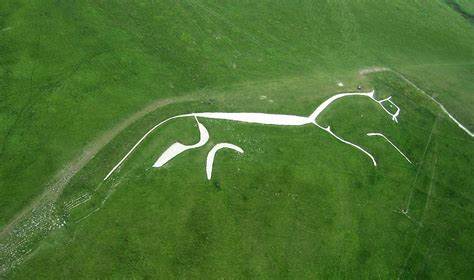
- What is a chalk figure?


lt’s the Weekend!

HOW TO MAKE A LAWN GAME
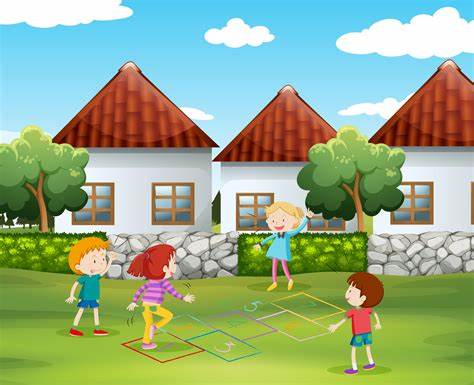
With summer coming, you may want to invite your friends around for games in the garden.
Being out in the fresh air is very good for you.
Here is an idea for a game you can set up to play.
You will need a small ball that you can throw. A cricket ball is too hard and a plastic ball might be too light.
Something like a tennis ball is good, as long as you have room to throw it and you don’t aim it towards any windows – that includes the ones in a greenhouse.
To have two or three balls would be even better.
Get together a number of receptacles like buckets and ice cream containers and label them all with different numbers. Don’t use cans with sharp edges.

You can put them in a line or collected together in a random pattern.
The harder you think it will be to throw a ball into the container, the higher the number you can allocate to it.
Put the numbers inside the container on a piece of paper. Or you may be able to sticky tape the pieces of paper to the side.
Mark a line for people to stand behind when they throw the balls.
Have a way to keep score and decide how many goes each person will have.
The person with the highest score is the winner.
If there is a draw for first place, you may need a play off!
Please note that the material on this blog is for personal use and for use in classrooms only.
It is a copyright infringement and, therefore, illegal under international law to sell items made with these patterns.
Use of the toys and projects is at your own risk.
©Christina Sinclair Designs 2015
Quick Quiz Answers
- What do you use a loom for? – to weave cloth
- What does a falconer do? – looks after birds of prey like falcons
- What is a reunion? – people meeting up again
- What is a scythe? – a tool that cuts grass, hay and straw
- What is a dodecahedron? – a twelve-sided figure
- What is another word for a looking glass? – a mirror
- What is a cloven hoof? – a hoof with a split down the middle
- Can you name the colours of the rainbow? – from the top = red, orange, yellow, green, blue, indigo, violet
- Where would you find the Aurora Borealis – they are lights in the sky at the poles of the planet
- What is a chalk figure? – a figure cut into a chalk hillside
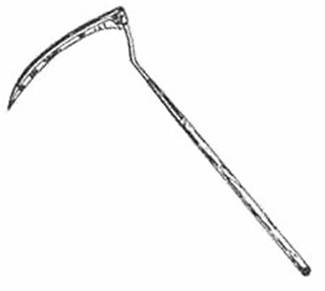
Scythe