
Salty Sam’s Fun Blog for Children
Number 599
Archery
Hello Everyone
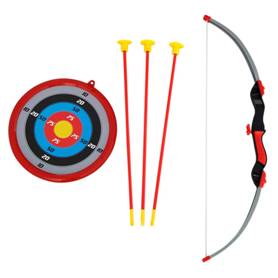
My Auntie Alice bought the children an archery set for them to play with in the garden this summer.
She told them that on no account should they ever point an arrow at any person or animal – ever! The tips of the arrows had soft rubber suckers on them rather than sharp points – but even so.
They had a target to aim at and she could give them some tins that were empty and washed and ready to go into the recycling bin to shoot at as well.
Just as long as they were careful not to cut their fingers on them!
The tins could be lined up on top of something like a dustbin or upturned wheel barrow. lt wouldn’t matter if the tins got dented.
Archery has been around longer than written history.
Ancient people used bows and arrows to bring down animals for food.
Before humans grew, harvested and stored crops they were hunter gatherers and during the winter when there weren’t many plants growing, meat was their main food source.
They did not have to be very close to an animal to shoot it with a bow and arrow.
A well-aimed arrow shot from a distance could bring even a large animal down. You can imagine that any nearby movement in a forest would cause an animal like a deer on high alert to run away quickly, so it was useful to be able to target them from a distance.
Also, some animals hunted, like bears, could be dangerous to man, so you would not want to get too close because it was dangerous for you.
People probably started hunting with spears, and then realized that if you could use something to propel those sharp sticks from a distance, you could stay hidden from an animal for longer, because you could stay further away, and what is more you could send the sharp projectile hurtling through the air with more force.
A hungry person who has had several unsuccessful hunting trips, would probably be thinking very hard about how to improve their success rate in obtaining food!
The skill of making bows and arrows would be something someone could practice, improve by trial and error and teach to the children of the tribe.
Bows and arrows were the main weapon used by foot soldiers on the mediaeval battle fields – shortbows and longbows; and then crossbows which have enormous power to launch deadly, deep penetrating arrows. They are also more accurate and have a longer range than ordinary bows.
The disadvantage of the crossbow on the battlefield was that they took longer to load and fire, but in spite of this, they could shoot arrows that could penetrate armour and kill a horse.
Men of the Middle Ages were expected to practice archery at home in case they were ever called up to fight in a battle.
But archery was to eventually become a sport enjoyed by nobility.
The Tudors liked to practice archery as a sport in their gardens and men and women could compete as equals – just like the Edwardians playing lawn croquet, or modern people playing a mixed-doubles tennis match.
Archery is now a competitive sport in the Modern Olympics.
And of course, don’t forget the most famous archer of all: Robin Hood.

The earliest arrows were sharpened sticks. Arrow heads could be put at the tip and were fashioned out of bone or stone.
We think that these hunting weapons have been used by humans for up to roughly 70,000 years!
And at some point after that, people inevitable started pointing them at each other!
Remains of bows and arrows found in central Europe, date back to about 18,000 years ago.
Flint was a stone easy to chip away at and make into a very sharp point. Flint was used to make the first tools. lts edges are extremely sharp when fashioned by hand into a cutting implement.
Bows and arrows were first developed in Africa, but were also used in the Americas and Asia as well as Europe.
When fletching made out of bird feathers was put on the end, it helped the arrows fly on a straight and stable path. The arrows were then more controllable and when you were hunting, you may only have one chance to get your aim right. lf you missed your target, you could go hungry for the whole day – or more.
Arrows were carried in a container slung over a hunter or soldier’s back called a quiver.
Later, making arrows was a special skill practised by artisans called fletchers, and they could sell their wares on market stalls. lt is crucial that the size, shape and positioning of the feathers at the end of the arrow is right; the whole arrow has to be expertly crafted.
Once somebody owned a bow, they may need to buy many new arrows over and over again, so fletchers always had business.
Wooden arrows tend to warp over time, so the shafts of modern arrows are usually made from man-made materials and so is the fletching.
ln the 1800s, archery became much more of a competitive sport, with national competitions, and was included in the 1900 Olympics held in Paris.
The sport was put into the Olympics again at a later date, and is still included today.
Nowadays, anyone can join an archery club and buy equipment to practice at home. lf you can hit the inner gold circle of the target, you will be awarded 10 points.
A person who practises archery is called an archer, bowman or toxophilite.
Bye bye everyone – don’t forget to subscribe to my blog!
Love and kisses
Salty Sam

www.christina-sinclair.com
Bill and Bob’s Joke of the Week
Bob: Why haven’t you eaten all your dinner?
Bill: l’m saving some food for Ron.
Bob: Who’s Ron?
Bill: Later on
Salty Sam © Christina Sinclair 2015
Unauthorized use and/or duplication of material from this blog without express and written permission from this blog’s author and owner is strictly prohibited.
Links may be used to www.christina-sinclair.com
Picture Gallery
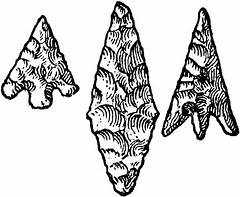
Flint arrow heads
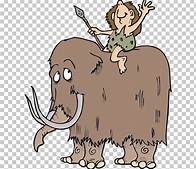
Ancient man
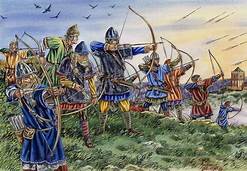
Mediaeval battle
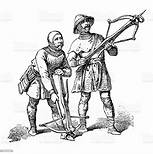
Crossbows
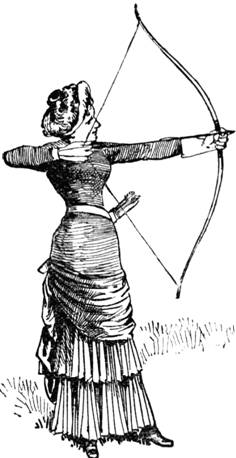
Victorian lady practising archery for sport

The centre of a target is called a bullseye
 THE SALTY SAM NEWS DESK

This week Bill, Bob and Emily were playing in Auntie Alice’s garden and had a bit of an accident.
They all fell out of a tree.
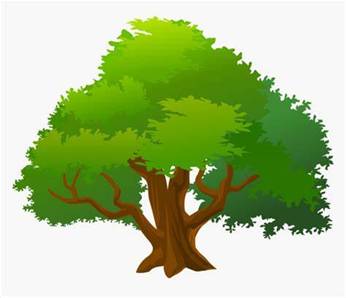
I think they were all holding onto each other at the time and consequently, they all came a cropper!
Emily had a sprained ankle, Bill had a bumped head and Bob had a grazed knee.
After their injuries were washed and bandaged, Auntie Alice made the children all lie down for a while in the living room. They were all a bit shaken up.
So that they did not get bored and start wandering off when they should have been resting, she gave them a puzzle to think about.
See if you can solve it…
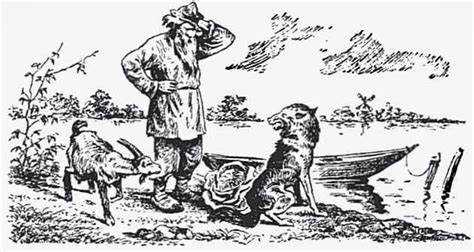
A man went on a long journey. With him he had a wolf, a goat and a massive cabbage.
Eventually he came to a wide river which he had to cross by boat.
There was a rowing boat in the water moored by the bank.
The man could use the boat to row across the river, but it could only carry him and one other thing that he was travelling with.
The problem was that if he left the wolf and goat alone together, the wolf would eat the goat, and if he left the goat and the cabbage alone together, the goat would eat the cabbage.
What was he to do?


In other news this week, I have had well over a million visits to this blog now, so thank you everyone around the world for your support – and also spreading the word about my blog.

*********************
*********************
 Quick Quiz
Do you know the meaning of these words and phrases? They all relate to war.
- keep mum
- the fog of war
- bomb happy
- friendly fire
- shell shock
- POW
- a marine
- a desert rat
- Blighty
- going over the top
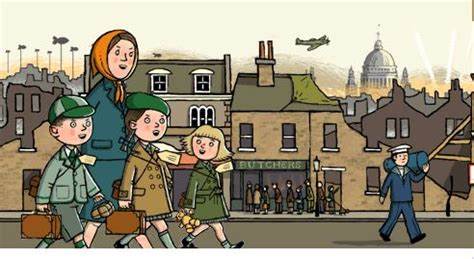

lt’s the Weekend!
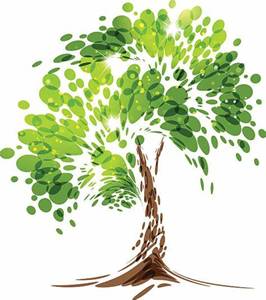
HOW TO MAKE A STYLlZED TREE PlCTURE
This is an idea for a picture you can use on the front of a greeting card.
Or you can draw a picture to put in a frame for your wall.
There are many different tree shaped to choose from as a starting point.
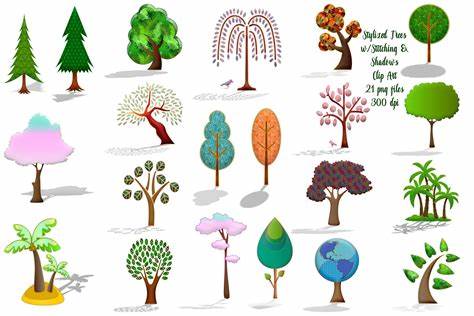
A trunk and branches will be your starting point.
You can choose spring blossom colours, green leaves or autumn colours which will give you a bigger range of colours.
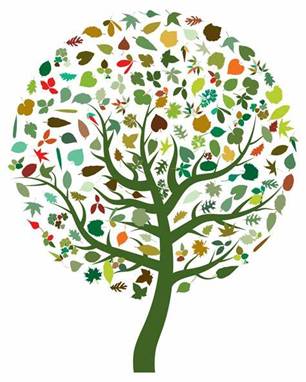
You can draw simple circles and colour them in with various colours or patterns.

Or you can draw one big circle and fill it in with shapes.
They could even be leaves.
These leaves can be all the same shape or a variety of shapes – or faces or animals of the planet.
And again you can use one colour or different colours.
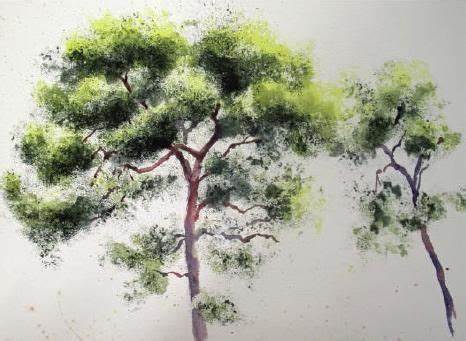
If you can find a bit of old sponge, this can be used to daub paint on a base of a trunk and branches.
Wait until your trunk is dry before you start dabbing paint on with your scrap of sponge.
In fact, wait until each layer of paint dries before you move on with another colour, because otherwise they will mush together.
Use three shades of green to give a sense of depth to the huge number of leaves you see on a tree.
Start with dark green at the bottom of the branches then move upwards with a mid-green colour and then end with light green to add highlights where the light will catch the top of the leaves.
Don’t put the paint on too thickly because you will lose the definition of individual leaves standing proud of the others – keep your sponge quite dry and build the paint up gradually.
The effects can be very striking.
If your painting goes wrong, just try again – and learn from your mistakes.
Please note that the material on this blog is for personal use and for use in classrooms only.
It is a copyright infringement and, therefore, illegal under international law to sell items made with these patterns.
Use of the toys and projects is at your own risk.
©Christina Sinclair Designs 2015
Answers to the News Desk Quiz
The man could row across the river with the goat.
Then he could row back to collect either the wolf or the cabbage.
When he got to the far side of the river again, he could leave the wolf or cabbage there and bring back the goat.
Then he could pick up the wolf or cabbage – whichever was left, leaving the goat behind on the first bank where it had been in the first place.
Then when the wolf and cabbage were on the far side of the river, he could go back to get the goat.
And then he could continue on his journey.
No, he could not make a pontoon bridge with cabbage leaves, buy two muzzles, or teach the wolf to row!
And he couldn’t ‘get a bigger boat’ – that is another story entirely!

Quick Quiz Answers
- keep mum – don’t tell anyone
- the fog of war – a lot of confusion when people don’t know what is happening during the fighting
- bomb happy – when someone’s nerves are shattered due to over-exposure to bombing – they are so tired and disorientated from the onslaught, they can’t think straight
- friendly fire – shooting or bombing by the soldiers who are supposed to be on your side – soldiers can get shot by people on their own side by mistake
- shell shock – a person who can’t stop shaking because of the effect of the constant explosions of cannon on their body – this happened a lot during World War l – the shaking could be so bad that they could not walk without falling over
- POW – stands for ‘prisoner of war’
- a marine – a soldier on a boat
- a Desert Rat – a soldier trained to fight in the desert
- Blighty – Britain – especially England (home) – a word used in lndia in the 1800s meaning a British visitor, but used to mean homeland from the Boer War (1899-1902) onwards – it became widespread in WWl
- going over the top – coming out of the trenches of the First World War in order to engage in battle
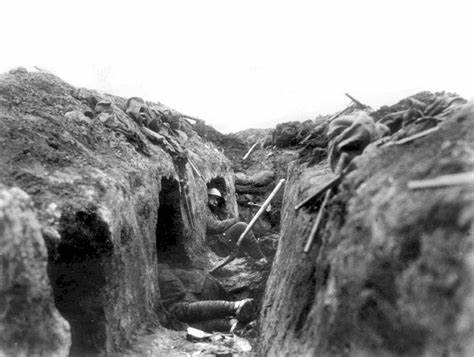
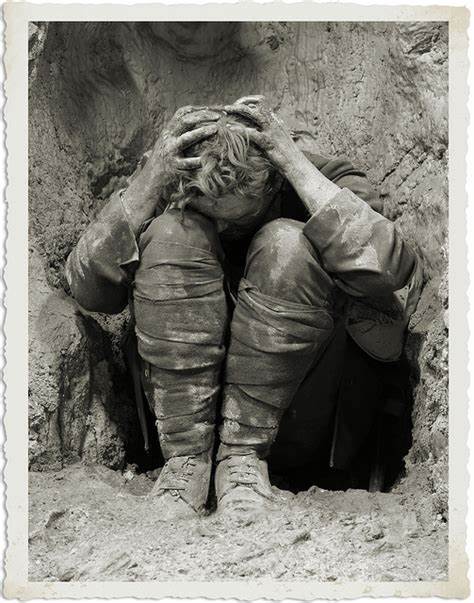
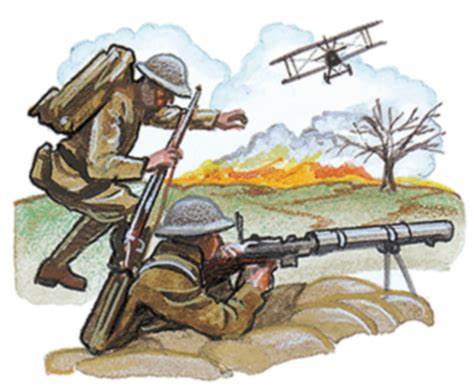
The trenches in the battlefields of WWI
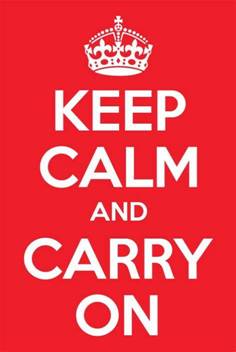
A message from WWII
Another story