Salty Sam’s Fun Blog for Children
Number 607
The History of Perfume
Hello Everyone
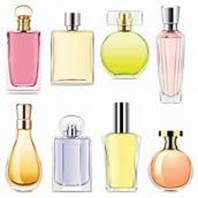
Emily asked Auntie Alice the other day why she had so many bottles of perfume on her dressing table.
Auntie Alice told her that the bottles were all so pretty that they were too nice to put away in a cupboard.
She had different scents to wear because she liked to match them to her mood of the day. 
She also said that people liked to buy her perfume as a present and that is why she had quite a lot of bottles.
Most women’s perfumes are actually bought by men. lt is an easy present for a man to buy for a wife or girlfriend and as people start doing their present shopping at this time of year, the sales of perfume go up. You may see a lot of advertisements for them coming onto the television as Christmas nears.
Emily asked if she could try some and Auntie Alice let her, but they noticed that the perfumes smelled different on each other.
This is because people have different ‘skin chemistry’ which has an effect on the smell of the perfume.
Perfume also changes its smell as it sits on the skin for a while.
Perfume has what is called top notes (or head notes) that smell first and heart and base notes that come through later. The top notes have higher volatility; or put in another way, evaporate more quickly than the other components of the perfume. The notes at the bottom are longer lasting.
The heart notes last longer than the top notes and have an influence on the base notes.
There are different categories of perfume.
They are described as having citrus smells and green smells and floral smells. Floral means relating to flowers. They can also be woody, fruity or spicy. Another word used is oceanic.
Some perfumes are light and fresh and some are heavy and mellow. Different perfumes are different colours – light, dark, even colours like pink.
The favourite smell that women like on the whole, it has been discovered is vanilla.
Lavender is also very popular.
Perfumes are made from oils from flowers, wood, resins, spices, fruit and other organic sources. So you can see that nature provides beautiful smells that can be blended into perfumes by perfume manufacturers – it is like making a recipe to smell rather than eat.
Sometime you need a huge number of flowers like roses, jasmine or lavender before you can extract a small amount of oil to make perfumes. This means the finished product can be very expensive to produce.
There are hundreds of ingredients to choose from.
Nowadays, there are artificial substitutes that can be used.
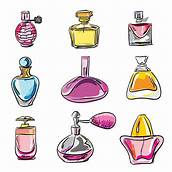
People have liked to live with beautiful scents throughout history.
Lavender could be put under rush matting on floors. lt released its scent when it was trodden on.
Herbs could be hung up to scent the air.
Perfumes were often used to mask smells in a time when people did not wash much.
Oils were used in worship.
The beginnings of perfumes were as offering to the gods. These sweet scents came from raw materials rather than manufactured blends of ingredients.
The earliest known perfumes were used 4,000 years in Mesopotamia when incense was discovered.
The word perfume comes from par fume which means ‘from smoke’ because originally they were burnt as incense in sacred ritual.
As time went on, people inevitably experimented with blending materials to make scented liquids and oils and also substances to burn to create scented smoke. People of all classes could do this but the most expensive scents were used by the rich.
Perfume was associated with beauty and luxury – and also power.
Perfumes were used by people in Ancient Egypt; men and women alike, and in Persia from about 3,000 years ago. Persia developed the art of infusing water with fragrance rather than oil and started to export it to other places to be used as body perfumes and in burial rituals
The Ancient Romans had perfume factories too where they made perfumes for themselves – for their skin, hair and bathing and also to export.
ln Ancient China, paper and ink was infused with perfume. lndia produced scents too.
The oldest perfume factory we know of was found in Cyprus. lt was 4,000 years old; in operation in the Bronze Age and very big, producing perfume on a large industrial scale.
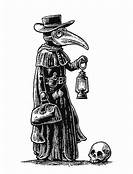
ln mediaeval times, nice-smelling herbs and spices were thought to protect people from disease. And deadly and very infectious diseases were rife (very common) in those days! Doctors put the concoctions in masks shaped like bird beaks.
Later in Renaissance ltaly, the making of perfume became a science.
Christopher Columbus discovered new ingredients in the New World that could be used like: cocoa, clove and vanilla.
The Hungarians produced the first modern perfume in Europe in the 1300s. They blended perfumed oils in a solution of alcohol. lt became known as Hungary Water.
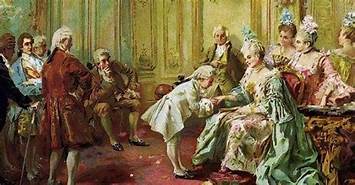
France was also an important perfume manufacturer from this time onwards. Many flowers grown in fields in the south of France sunshine stocked the industry. When the French royal court moved to Versailles it became the centre of the perfume industry.
Today the town of Grasse is known as the world’s perfume capital.
The Emperor Napoleon was very partial to using cologne. He loved violet and jasmine scents and Josephine loved musk and it is said that the smell of it lingered in her rooms sixty years after her death!
By the end of the 1800s, middle class women as well as rich ones were buying perfume to wear. For the first time synthetic (man-made) chemicals were beginning to be used.
Chanel No. 5 became famous in the 1920s and continued to be one of the most popular perfumes. But in the decades to follow, different perfumes became fashionable for a while.
Estee Lauder’s first fragrance was Youth Dew introduced in the 1950s.
A famous fragrance from the 1980s was Poison by Christian Dior. This was not a name likely to have ever been used before this time – when women were encouraged to be feminine and demure (soft). But in this time women were becoming stronger and more assertive in business and the workplace generally.
New perfumes are introduced in modern times and compete against the classics. ln order to get noticed, these new introductions often have a celebrity’s name linked to them. They are part of their brand and merchandise. They could be actors or singers, for example.
A technician who makes perfume is called a perfumer. Nowadays, they are employed by fragrance corporations.
Some people like to wear lots of different scents, and some always wear the same one. Men wear different scents from women. Children don’t tend to wear perfume but love nice smells so they can have them on their clothes if their mum puts fabric freshener in the laundry.
A smell that reminds you of a memory from a long time ago can transport you back in time instantly.
lf perfume gives you a rash on your skin, you can wear it on your hair.
Essential oils should never be put directly on the skin.
Auntie Alice said that if Emily wanted her own perfumes she might like to use nice-smelling hand cream or bubble bath.
Bye bye everyone – don’t forget to subscribe to my blog!
Love and kisses
Salty Sam

www.christina-sinclair.com
Bill and Bob’s Joke of the Week
Bob: What was the name of the book that we were supposed to get for Emily from the library this week Bill?
Bill: lt’s called Health and Beauty by Q. T. Fayce.
Salty Sam © Christina Sinclair 2015
Unauthorized use and/or duplication of material from this blog without express and written permission from this blog’s author and owner is strictly prohibited.
Links may be used to www.christina-sinclair.com
Picture Gallery
Mediaeval doctor
French Court at Versailles
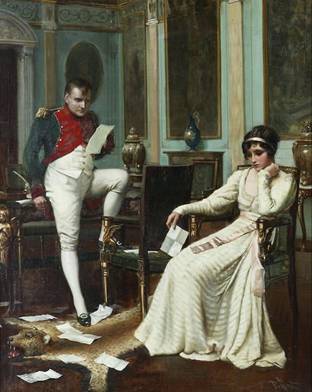
Napoleon
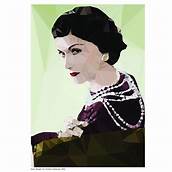
Coco Chanel was a trend setter in the 1920s
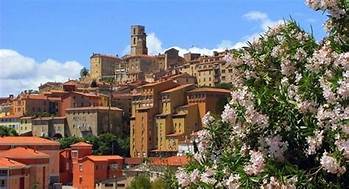
Grasse
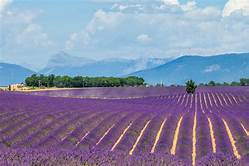
Lavender field
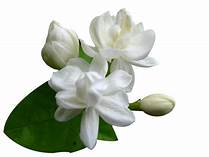
Jasmine
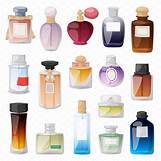
The design of a perfume bottle is well-thought out
This is a luxury product
 THE SALTY SAM NEWS DESK

This week, Bill, Bob, Henry and Emily got together in Henry’s attic playroom to write some questions for their team for the class Friday afternoon quiz next week.
Would you like to see if you can answer their questions?
- Which is the only state in the USA to feature the Union Jack on its flag?
- Why are moths attracted to lights?
- What colour is azure?
- Which European country is shaped like a boot?
- What is a patella?
- What is the capital city of Australia?
- What does YH signify on a map?
- Is a tomato a fruit of a vegetable?
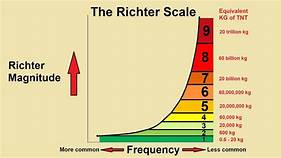
- Earthquakes are measured using which unit of measurement?
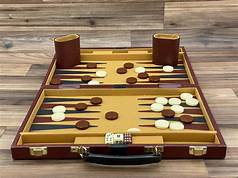
- What is backgammon?
- In which year did WWI begin?
- Which animal features at the beginning of MGM films?
- What does H.I.I.T. stand for?
- What is the name of a diary that a ship’s captain writes in?
- What is the shape of a full moon?
- What animals feed their babies milk?
- What is Harrods?
- How many seconds are there in an hour?
- Which flower is a symbol of remembrance?
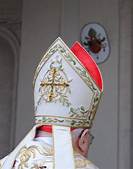
- Who wears a mitre?

And also l would like to take a moment to give a special shout out to all the new subscribers who have recently joined my Salty Sam community.
You all know who you are. Thank you for your support.

Welcome aboard!

*********************
*********************
 Quick Quiz
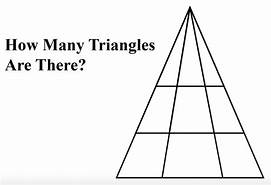
lt’s the Weekend!
HOW TO MAKE SUGARED FLOWERS
This recipe is using real flowers so you had better work under the guidance of an adult so that you don’t start eating poisonous flowers because some are edible and some are – deadly!
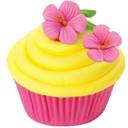
You can use rose, pansy, violet and nasturtium flowers.
You can use these sugared petals to decorate cakes and puddings.
You can have a pink and purple colour palette with the roses, pansies and violets or an orange and yellow one with the roses and nasturtiums.
Roses will give you a huge range of colours to choose from, from whites to dark crimsons. Pansies can have a good colour range too.
You will need to gather everything you need together first so that you have everything to hand when you start working.
You may want to have a sheet of kitchen paper to hand too, in case you need to wipe anything as you work.
Ingredients
2 cups of flowers
½ cup castor sugar
Egg whites of 3 eggs
Tools
Tweezers
Small paintbrush
Kitchenware
Spoon
2 Bowls
Egg-beater
Airtight storage container like a biscuit tin
Supplies
Waxed paper
- Gently wash the flowers and leave them to air dry
- You only need petals not the leaves and stalks, so don’t worry if the flowers fall apart a bit
- Put the egg white in one bowl and beat
- Put the sugar in another bowl
- Use the tweezers to get hold of a flower
- Paint the beaten egg whites onto the entire surface of the petals using the brush
- Drop the flower in the sugar and coat with the sugar using the spoon to help you
- Put the coated flower on the wax paper using the tweezers again
- Leave for at least 8 hours to dry
- When the flowers are dry and hard they can be packed away into the tin between layers of wax paper to separate them
Although the petals need to be well-covered, they don’t need such a thick coat that you can’t see their details any more.
If you find this a fiddly and difficult job to do, just keep practising.
When you have made your decorations, rose petals can be sprinkled in a drift pattern but tiny violets that keep their shape can be used to create a regular pattern around the top or base of a cake.
Which ever way your decorations end up, they will look very pretty.
Please note that the material on this blog is for personal use and for use in classrooms only.
It is a copyright infringement and, therefore, illegal under international law to sell items made with these patterns.
Use of the toys and projects is at your own risk.
©Christina Sinclair Designs 2015
Answers to the News Desk Quiz
- Which is the only state in the USA to feature the Union Jack on its flag? – Hawaii
- Why are moths attracted to lights? – so they can meet up together in the same place
- What colour is azure? – blue
- Which European country is shaped like a boot? – Italy
- What is a patella? – kneecap
- What is the capital city of Australia? – Canberra
- What does YH signify on a map? – Youth Hostel
- Is a tomato a fruit of a vegetable? – fruit
- Earthquakes are measured using which unit of measurement? – Richter Scale
- What is backgammon? – a board game
- In which year did WWI begin? – 1914
- Which animal features at the beginning of MGM films? – a lion
- What does H.I.I.T. stand for? – High Intensity Interval Training
- What is the name of a diary that a ship’s captain writes in? – a log
- What is the shape of a full moon? – round
- What animals feed their babies milk? – mammals
- What is Harrods? – a department store in London
- How many seconds are there in an hour? – 3600
- Which flower is a symbol of remembrance? – poppy
- Who wears a mitre? – a bishop
Quick Quiz Answers
18