Salty Sam’s Fun Blog for Children
Number 609
Loch Ness
Hello Everyone
Last week, l was telling you about the Highlands of Scotland and the tree planting projects that are going on there in the very large landscapes.
One of the most famous places in the Highlands is Loch Ness.
Loch is a Scottish word for lake.
Loch Ness is 23 miles long and over 700 feet deep, and too deep for most divers to dive right down into.
Loch Ness is the biggest body of fresh water in the British lsles.
Sometimes, the surface of the water is a bright blue colour, sometimes, it is as smooth as the surface of a mirror, and sometimes, it is turbulent and choppy and the muddy colour of the peat that is to be found in the water.
ln 1830, work began on an ambitious engineering project under Thomas Telford to link the lochs of the Great Glen. The Great Glen is a geological fault line (like a large crack) that runs diagonally across Scotland and is made of some of the oldest rock layers found in the world.
The loch has walls of granite and a lake bed of soft clay deposited by glacial activity a long time ago.
Lock Ness is the biggest loch in a line of four lochs that were linked together by building 29 canal locks and 4 aqueducts (a bridge with water on it that boats can float on).
This project created a 100km/60 mile passage that runs from the east coast at lnverness to the west coast at Corpach near Fort William. The passage was called the Caledonian Canal and cut the Highlands in two.
Thousands of boats were then able to travel to the rich fishing grounds of the North Sea off the east coast.
People have lived on the picturesque shores of Loch Ness for centuries.
But then in the 1930s, a road was built along side of the loch.
This was at a time when more and more people were travelling far and wide in motor cars. And there were more and more motor boats on the surface of the loch too.
Tourists starting visiting the beautiful scenery to be seen in the area – and they started seeing unexpected things too.
You know what l am going to say, don’t you!
They started to see a strange object moving in the water.
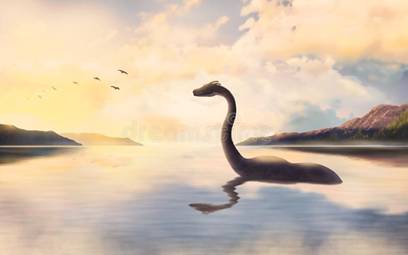
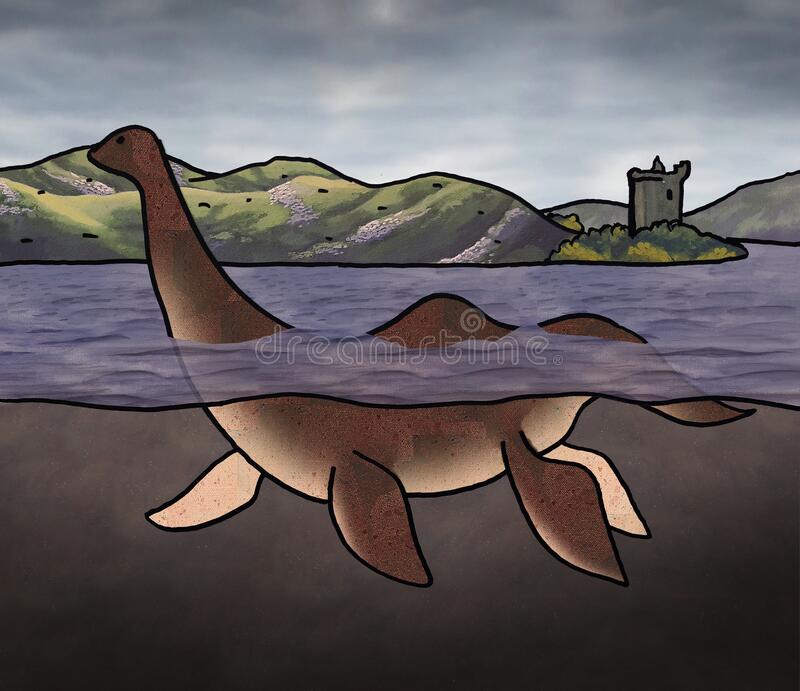
They believed they were seeing a large, strange creature swimming just below the surface of the water.
And word spread.
Over the decades since, about 1,000 people have claimed to see the Loch Ness monster and many have photographed and filmed an unexplained moving object.
The Loch Ness monster is what is called a cryptid. A cryptid is a creature that is legendary and not known by mainstream science.
A visiting surgeon took what is now probably the most famous photograph of Nessie (as the monster is affectionately called). lt seems to show the head of a serpent rising out of the water. The photo was taken in 1934, but it was later declared to be a hoax.
Lots of people say that other photos were hoaxes too – or maybe people mistook a swimming otter for something more fanciful.
Some people have suggested that a ghost of a prehistoric monster might be spotted from time to time. Who says that ghosts can’t be that old?
So sure were so many people that they had seen a strange creature swimming about in the water that scientists set themselves the task of getting to the bottom of the mystery.
Over the years, boats have trawled the lake with sonar to map the whole stretch of water to its deepest points. Was there a cave or even a few caves where a monster could hide? The sonar evidence didn’t find that to be true.
Scientists have assessed DNA found in the water to see what life is to be found there.
Small submarines have been launched into the murky depths to explore where divers could not go.
Once a photograph of a large, diamond-shaped fin was taken by one underwater camera – what kind of creature did it belong to?
Could a prehistoric dinosaur be living in the lake?
Maybe it swam in from the sea through an underground tunnel and evolved to live in fresh water instead of sea water? Or maybe when the ice melted after the last lce Age and raised sea levels the sea water reached into the loch joining it to the North Sea and then since receded (dropped down) and a family of sea dinosaurs swam in and got trapped?
Well, there were dinosaurs living in Scotland once. We know this because many fossils have been found there. But these dinosaurs became extinct about 66 million years ago and much later than that, an lce Age turned Loch Ness into a large block of ice. This would have melted about 10,000 years ago when the lce Age ended. No creatures could have swum around in a solid block of ice.
ln 2018, scientists from New Zealand checked out the waters of Loch Ness and out of the 3,000 creatures they catalogued living there, no unknown species was found. But there are eels living there that can grow up to 13 feet long; and that is a monstrous size.
The deep waters of the loch still get very cold, but a warmer top layer can form when it is heated by the sun.
When the wind blows, it pushes this thin warmer layer of water up the loch across the denser cold water underneath.
Then the warm layer bounces back along the loch moving in the opposite direction to the wind.
Large objects like a log can be carried by the water giving the illusion that something is swimming against the wind.
Might a log being pulled along ruffling up the water surface account for some of the sightings? The log could look like a creature swimming just under the surface of the water leaving a trail of disturbance behind it. You don’t see any kind of head rise up in any of the film footage.
Some people have seen humps of water forming in a line. They look like a swimming serpent.
But the loch has a very particular shape. lt is very long and narrow and has steep sides. This means that the wakes of boats travel up and down the water and can last for hours after a motor boat has passed by and is well out of sight.
People have lived in the area for a very long time and the sightings of strange movements in the water that started people talking about monsters only started when motor boats started travelling up and down the loch.
Sailing boats don’t leave wakes on very smooth, flat water because they cannot travel at all when the water is that calm. They can only travel when there is wind, and when the wind blows it disturbs and agitates the surface of the water making boat wakes less obvious.
Motor boat wakes can look like the humps of a curvy serpent.
One thing is for sure though, over a million tourists visit the area each year and many of those give a look out to see if they can see a strange sight in the loch. lt is reported to bring in about £40 million to the Scottish economy!
The mystery of the monster is very good business for the local tourism industry.
And people always love a good mystery!
So Nessie will always, in a sense, live there if we imagine she does.
Bye bye everyone – don’t forget to subscribe to my blog!
Love and kisses
Salty Sam

www.christina-sinclair.com
Bill and Bob’s Joke of the Week
Bob: What do you give a monster with seasickness?
Bill: Plenty of room!
Salty Sam © Christina Sinclair 2015
Unauthorized use and/or duplication of material from this blog without express and written permission from this blog’s author and owner is strictly prohibited.
Links may be used to www.christina-sinclair.com

Picture Gallery
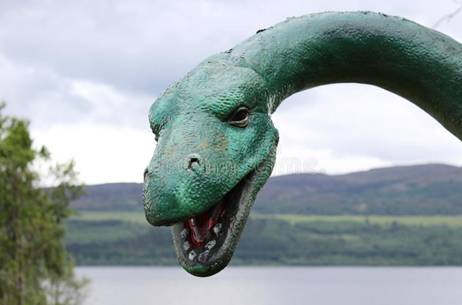
A statue at Loch Ness
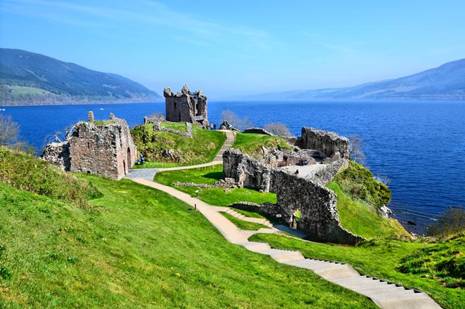
People have lived in the area for a long time
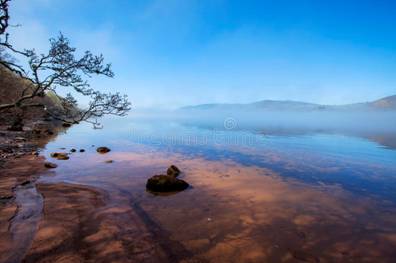
The area has beautiful scenery
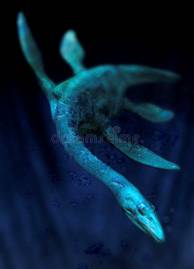
A sea dinosaur
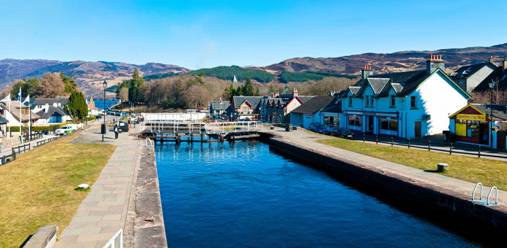
The Caledonian Canal
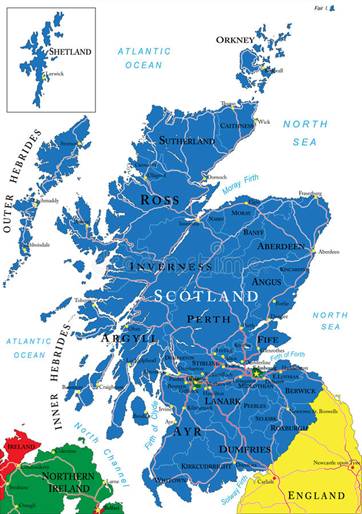
Loch Ness is just above the word Inverness
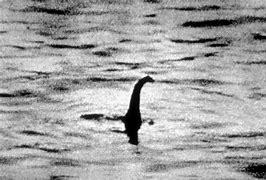
The photo that started it all
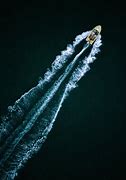
A boat wake

 THE SALTY SAM NEWS DESK

This week, the children at the Rocky Bay Primary School had a special visitor.
It was Mr Gnasher the Rocky Bay dentist.
Mr Gnasher had been to see the children before some time ago, but he thought it was about time he came to see them again.
The first thing he did, was to ask the children what they remembered about what he had told them before.
They told him that they all brushed their teeth with toothpaste at least twice a day and sometimes even three if they had the chance – maybe at the weekend.
Mr Gnasher said that the children needed to especially remember to scrub very well behind their bottom front teeth because it was there that plaque/tartar/calculus built up quite quickly.
It was always worth spending extra time cleaning the backs of your bottom teeth.
Some children said they used the toothpaste that the whole family used and some had their own toothpaste because they like the taste better than the toothpaste that grown-ups use.
Mr Gnasher said that you only need to use a blob of toothpaste the size of a pea on your toothbrush; you did not need to swamp the whole brush with paste.
You should also buy a new toothbrush frequently – maybe three or four times a year and then you can use your old brushes for cleaning jobs around the house.

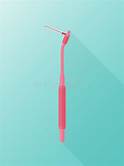
Mr Gnasher showed the children some small brushes that they might not have seen before. They were called inter-dental brushes.
Toothbrushes normally clean the tops and back and front of your teeth.
Inter-dental brushes cleaned the sides as well.
You poked them between your teeth. You could even call them pokey brushes if you wanted to!
There were two shapes – one had a handle you could hold in your fingers.
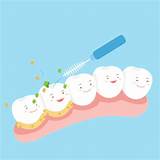
And one had a really long handle you could hold in your hand and it made it easy to get to the back of your mouth with them.
The brushes were different colours and the colours told you what size the brushes were. If your teeth are close together, you need quite a thin brush to get between them.
The brushes were quite delicate so you shouldn’t be too brutal with them otherwise they would not last very long!
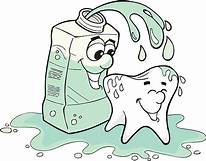
Mr Gnasher said that using mouthwash was a good idea to because it finished off cleaning your mouth very well.
You could swish it into all the places you may have missed with your brushes. It swished all around your mouth over your tongue and gums as well as your teeth.
Using inter-dental brushes and mouthwash as well as a toothbrush and toothpaste meant you would do a really thorough job on cleaning your mouth.
Mr Gnasher said that the children would not have twinkly, sparkly teeth unless they cleaned them really well.
The children thought that Mr Gnasher was very funny.

My blog used to attract hundreds of visits every week,
and now it attract thousands of visits every week.
So thank you everyone for your support
and thank you also for telling your family and friends
about my site too
because it helps it to grow a following
and that is important to help keep it going.

*********************
*********************
 Quick Quiz
Can you work out what these words are?
They all relate to holidays…
- c _ _ _ _ _ n
- i _ e c _ _ _ m
- t _ _ _ _ _ g
- c _ _ _ _ _ _ e
- s_ _ _ _ _ _ _ _ _ g
- f _ n p _ _k
- t _ _ _ _ _ _ g
- s _ _ _ _ _ g
- s _ _ _ _ _ _ g p _ _ l
- w _ _ _ _ _ _ _ _ e
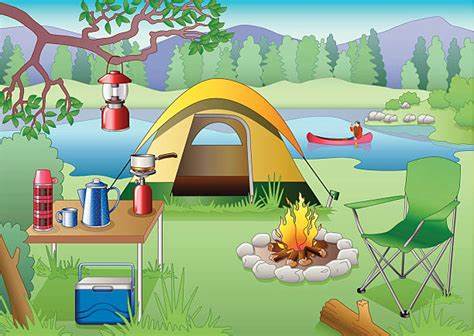

lt’s the Weekend!
HOW TO MAKE A STAlNED GLASS WlNDOW STlCKER
Make these stickers to decorate your windows. Choose a simple design to make this project work well.
You can have unicorns or super-heroes flying across your window!
- Draw a design on an A4 piece of paper
- Put the paper inside a plastic page holder – the type you use for ring binders
- Mix some black paint into some PVA glue and paints black lines onto the plastic over your pencil lines using a squeezy bottle to make the lines very neat
- Leave this black paint to dry
- Mix food colouring into some small pots of PVA glue – the food coloring will ensure that the colours remain see-through
- Fill in the sections created by the black lines
- Leave to dry
- Peel the sticker off the plastic and press onto a window

Please note that the material on this blog is for personal use and for use in classrooms only.
It is a copyright infringement and, therefore, illegal under international law to sell items made with these patterns.
Use of the toys and projects is at your own risk.
©Christina Sinclair Designs 2015
Quick Quiz Answers
- caravan
- ice cream
- touring
- campsite
- sightseeing
- fun park
- trekking
- sailing
- swimming pool
- waterslide