Salty Sam’s Fun Blog for Children
Number 610
The Edible Playground
Hello Everyone
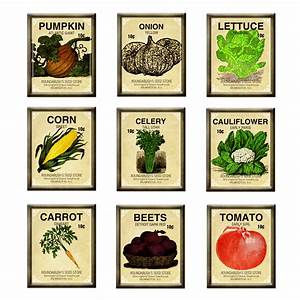
Last school year, the children at the Rocky Bay Primary School set up a project to grow a huge number of trees to be planted onto local farmland with the help of their teacher Miss Pringle.
They have over seven hundred little trees growing in small pots in the playground.
The children were a little worried at one point because leaves started to fall off their little seedlings but Miss Pringle told them not to worry – leaves fall of broadleaf trees in the autumn no matter how small they are!
Next spring, they intend to re-pot their little trees into larger pots to give them more room for their roots to grow. The heavier weight of the bigger pots will also mean that they are less likely to tip over as the tops grow taller.
So this winter, the children will have to work very hard to find plenty of vessels big enough to use for their re-potting project at the end of this coming winter.
There are plenty of hornbeam, sycamore, hawthorn, field maples and fruit trees growing in the playground.
There are also loads of oak trees too. lf they continue to grow well, they should live for hundreds of years to come.
The children told Miss Pringle that they enjoyed growing plants so much that they would like to grow some more next year.
Miss Pringle then had an idea.
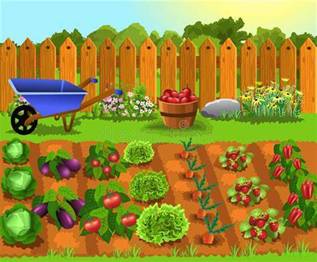
She asked the children if they would like to grow some vegetables.
They thought it was a wonderful idea.
So Miss Pringle asked Mr Grumps the school caretaker if he would construct some raised beds to be filled with compost.
Then there would be somewhere for the children to grow vegetables next spring.
They could plant the seeds in the spring and harvest vegetables in the summer.
lt would be a wonderful lesson on how to grow plants.
Then they could sell the vegetables to parents when they came to pick their children up from school – or anyone else who wanted them as well of course.
Then they would have vegetables to cook for dinner that would be very fresh indeed.
They could take the money and invest it into more seeds and compost for the following year.
They could even start their own compost heap to save money.
There would be leaves from the vegetables that they would discard (throw away) like the outer leaves from the cauliflower plants for example and they could mix them in with torn up waste paper and cardboard from the classroom.
They would employ a no dig policy. That means that you just sprinkle compost on top of the vegetable patch from time to time – just enough to cover the surface you can see with new compost, it does not have to be a very thick layer.
This is good for soil health; it means you have very few weeds and you don’t disturb or damage the worms who are working away in the earth improving soil structure and quality. The soil remains so loose at the surface that you don’t have to dig your vegetables up – you can just pull them up.
No dig gardening gives you healthy soil and less work to do – a win-win situation all round!
Bill, Bob, Emily and Henry already know a lot about growing vegetables because Auntie Alice has taught them so much in her back garden.
They know that you have to plant sweet corn in a grid pattern because they are wind pollinated.
They know that you have to dig onions up carefully when you harvest them so that you keep their bottoms in tact which mean they store better.
They know that rhubarb leaves are poisonous.
They know how to shell peas and broad beans.
They know that radishes and lettuces do not take too long to grow.
They know that tomatoes have a longer growing season if they are grown in the greenhouse and potatoes do not need to be grown in the greenhouse because they are very happy outside.
They know that carrots need enough room to grow to be nice and round and pumpkins needed lots of room to grow and lots and food and water too.
They know that you can plant ‘sacrificial plants’ like nasturtiums to entice black fly away from vegetables you want to eat before they do!
They know that there are lots of ways of storing your harvest through the winter.
You can pickle beetroot and cucumbers, you can make fruit into jam and you can dry herbs.
You can freeze fruit and vegetables as well. Cookery books can give you instructions on how to prepare them so that they preserve well.
Mr Grumps promised to make the vegetable beds for the children and also he planned to fix a water butt to a drainpipe so that they could collect rainwater to water the soil.
Miss Pringle would ask parents to donate any old tools they did not want anymore.
They are definitely going to be very busy next year!
Bye bye everyone – don’t forget to subscribe to my blog!
Love and kisses
Salty Sam

www.christina-sinclair.com
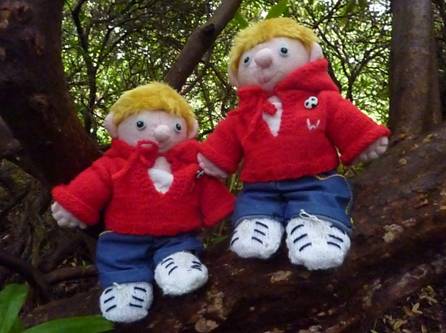
Bill and Bob’s Joke of the Week
Bill: What is small, red and whispers?
Bob: A hoarse radish!
Salty Sam © Christina Sinclair 2015
Unauthorized use and/or duplication of material from this blog without express and written permission from this blog’s author and owner is strictly prohibited.
Links may be used to www.christina-sinclair.com

Picture Gallery
 THE SALTY SAM NEWS DESK


This week, Bill and Bob had an idea for a wood-working project that they wanted to try out and Emily and Henry wanted to join in too.
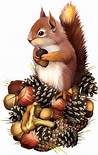
Autumn is well and truly here, and there are animals looking to cache a store of food and find a home to snuggle up in to keep warm in the cold winter weather.
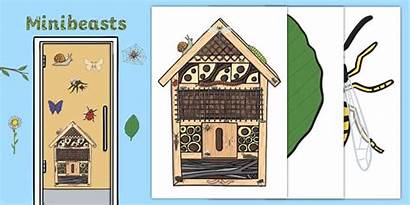
The children found a tall bookcase in the back of Auntie Alice’s sheds and asked her if they could have it to make a gigantic bug hotel.
She said that she would like to help, but she was using it to keep tools and string and small watering cans on and she couldn’t give it up for the insects.
So I found some wood, and we set about making a similar structure with five shelves. We set it up in a far corner of the garden at Rose Cottage and the children set about finding different things to put on the shelves that little bugs would like to hide in over the winter.
These bugs will pollinate the flowers next year; they will provide food for the birds.
The children found broken canes and broken, clay tiles to pile up, pinecones, straw, teasels, dried grass, sticks, poppy seed heads, a few empty snail shells and even some shells from the beach.
Everything was for free. Everything was natural materials.
The children also found some broken flowerpots to push things into and everything got packed tightly into the shelves from top to bottom.
We don’t want everything falling apart in the first strong wind or shower that comes along!
The most important thing was to create lots of little cracks and crevices for the bugs to snuggle into over the winter and they had plenty of places to choose from.
Of course, animals can find their own homes in discarded objects sometimes.
You know about the hermit crabs that tuck their soft bodies into shells and have to find a bigger one as they grow.
There is an insect that likes to use discarded shells too.
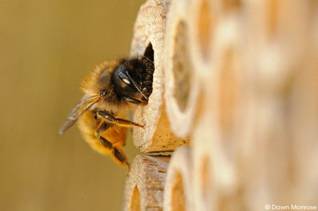
It is called the red mason bee; a solitary bee that likes to lay its eggs in little holes like plant stems, empty beetle hollows and even key holes!
But another thing it likes to use is empty snail shells.
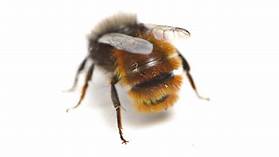
The female bee will find a shell and move it into her required position. Then she will fill it with gathered pollen and nectar, which takes a while, to store deep inside the shell.
She lays her eggs in the store of food and seals the chamber up with chewed-up plant material; she repeats this process up to five times if the shell is big enough.
Next, she builds a defensive wall of tiny stones and soil, and seals the entrance with more chewed-up plant material.
Then she turns the shell to a position where the entrance faces downwards.
To finish her task she builds a teepee of small lengths of dried grass to hide the shell in its own little house.
The bee will repeat this process many times over the summer to start a new brood.

*********************
*********************
 Quick Quiz
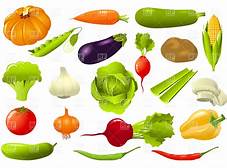
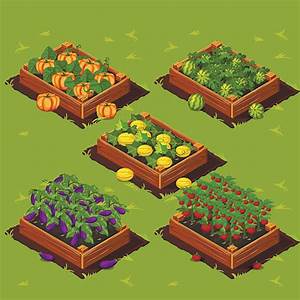
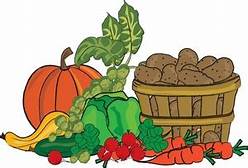
How many vegetables can you name?

lt’s the Weekend!
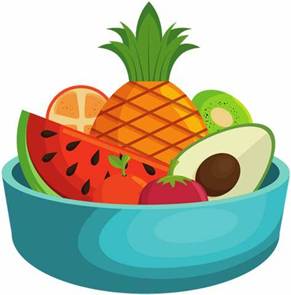
HOW TO MAKE AN ENVlRONMENTALLY-FRlENDLY FLY TRAP
This week, Auntie Alice was very busy in her kitchen preparing the last of the season’s fruit for storage.
But she was annoyed by a swarm of fruit flies that seemed to come from nowhere and they were buzzing around her in the kitchen.
She did not want to use fly spray because there was food that people would eat everywhere.
So she tried to make a fly trap.
This is what she did.
- She took a small bowl and covered the bottom in water.
- Then she added a tiny drop of fruit juice – (it was pineapple juice actually)
- A tiny drop of cider vinegar
- A tiny drop of washing-up liquid
When she went to bed she checked the trap and could not believe how many flies she had collected.
The next morning, there were more flies in there, and by the time she went to bed again there were even more.
This trap is not harmful to humans or pets, quick and easy to make and seemed to work really well.
Please note that the material on this blog is for personal use and for use in classrooms only.
It is a copyright infringement and, therefore, illegal under international law to sell items made with these patterns.
Use of the toys and projects is at your own risk.
©Christina Sinclair Designs 2015
Quick Quiz Answers
Pumpkin carrot cucumber pea aubergine radish potato
sweet corn broccoli garlic cabbage celery mushrooms
tomato (fruit) onion beetroot pepper chillies