Salty Sam’s Fun Blog for Children
Number 560
Public Houses
Hello Everyone
The Rusty Anchor lnn on the Rocky Bay Harbour wall is an old smugglers’ inn.
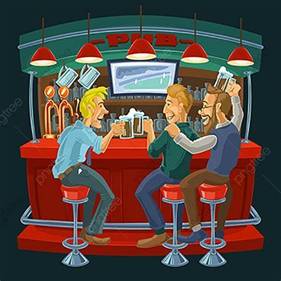
lt is owned by Reg and Ruby. They are the landlord and the landlady. The Rusty Anchor is what is called nowadays, a public house. Public houses are often called pubs and are represented on maps by the initials PH.
The Rusty Anchor belongs to Reg and Ruby, and it is where they live, but it is also open in part for members of the public to come and meet and socialize with anyone else.
But if anyone started causing trouble, which isn’t very likely in Rocky Bay – oh unless we are talking about those scallywag pirates Barnacle Bob and Jolly Roger who sail their pirate ships in these local waters; the landlord or landlady is empowered to ask them to leave.
l should probably also mention at this point, Mandy the mermaid, a figurehead that once adorned the bow of a ship, who props up the bar and adds a nautical note to the inside of this dockside establishment.
ln the summer time, there are tables and benches outside for people to sit in the sunshine. But in the winter, the tables are put away so that they don’t get soaked by winter storms or the sea waves crashing over the harbour wall.
The pub is warm and snuggly inside in winter, and the atmosphere is very cosy. There aren’t many tourists and holiday-makers around in winter; only locals.
People can meet up and chat and have a laugh.
They can play games like dominoes, darts or skittles.
There is an occasional pub quiz night.

Some pubs welcome children and even have play equipment for them out in the garden like swings and slides; others are for grown-ups only.
Pubs sell drink to be drunk on the premises. A shop that sells alcoholic drinks to take home is called an off licence – or sometimes offy for short.
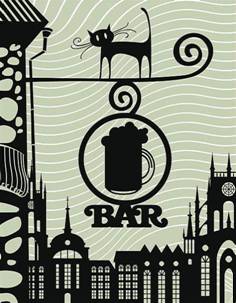
Every pub has a name with a board outside showing its name, and also a pictorial representation of the name. The pictures were first introduced at a time when a lot of people could not read, and had to find their way into a meeting place by looking at the picture outside.
Pub names might relate to geographical area, that is to say if they are by the sea like (The Dolphin) or some large docks (The Schooner) or a rural area (The Old Dun Cow). Some might be named after a local historical figure. Some have changed their name and are now named after a more modern famous person.
(Dun means a brownish grey-colour, by the way.)
The word Arms in a pub name refers to a local noble family.
But there are lots of wonderful pub names to be found all over the country.
Some of them have been twisted from other words like the Elephant and Castle (a place in London) from La lnfanta de Castilla.
They sell drinks that are alcoholic or soft, along with snacks like packets of crisps and some of them sell meals as well. Actually, it is usually very good food and served at a reasonable price – so tourists should always look out for pubs that serve meals if they are feeling hungry.
Some pubs have different parts to them. They may have a beer garden outside, and then inside there may be a public bar and a saloon bar which has better décor; you are supposed to be nicely dressed to go in the saloon – well not in muddy or grubby work clothes anyway, and then a snug which is a small area divided off where people can meet and talk in private.
lf there is a private bar, only some people are allowed in there.
Hostelries have been around since the Roman Era, and even before, and so have been serving refreshments to travellers and workers for a long time.
We know they have been around for over 2,000 years, and there are pubs in Britain that are over 1,000 years old and still open – they are very often built of stone – well, stone is long-lasting.
And brewing has been around for thousands of years. Water found in the landscape was not always safe to drink, brewed and manufactured drinks were; and brewing happened in every house.
Children drank a drink called small beer which had low alcohol content.
Brewing was mostly done by women, and they could sell their brews and cooking to travellers.
(Nowadays pubs can be owned by large breweries who supply barrels of beer and cider to them.)
For a long time, job opportunities for women were very limited, and if they did not have a husband, it could be hard to earn money.
After the collapse of the Roman Empire, the Roman taverns became alehouses, and these became social meeting places.
When people were working out in the fields all day, maybe alone, they were grateful to get together with other people for a chat in the evenings.
Public Houses appeared in the late 1600s, and were considered superior to alehouses. Pubs were, and still are, the focal part of the village.
Once neighbours know each other, they can help and support each other.
Historical pubs often had bedrooms for travellers and stables for their horses with ostlers (stable workers) to look after them while the travellers rested.
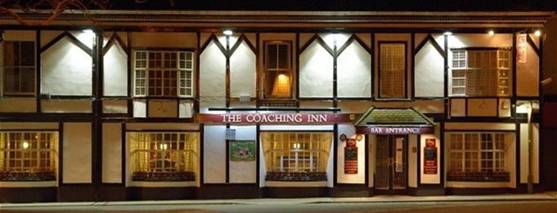
They were called taverns or coaching inns or hostelries.
ln Tudor times, the innkeeper could have been a postmaster as well; looking after the letters as they travelled between towns.
After the lndustrial Revolution, working men often wanted to get away from their factory or other place of work and also their wife and children who maybe all lived in a very cramped, small house together, and spend a while relaxing with friends over a couple of pints that could have lasted all evening.
Under the 1830 Act, any householder, on payment of two guineas, that is £2.10, could obtain permission to brew and sell beer or cider (made from apples) in their home. However, they were not allowed to sell spirits like gin and brandy, which are stronger drinks. These beer houses were also not allowed to open on a Sunday.
These householders earned so much money, that they were often able to buy the house next door to live in, and then turn the first house into lots of seating space to accommodate even more customers.
lt was in the 1800s, that pubs as we know them today first appeared. They were clearly signed and did not look like domestic houses anymore.
They are places of entertainment, and social places, and for the most part, only for men.
For a long time pubs were not a place that a well-bred lady would have ever gone to.
For most of history, job opportunities for women were very limited, and when women got married, they very often retired from work if it was at all possible for their husband to support them.
lt could actually be a shame for a husband if his wife had to work, because it meant that he was not earning enough money to keep his family. This changed from the 1960s onwards.
But inside a pub, men and women tended to mix on equal footing, and a landlady had a lot of power within her own premises. She was often the person who organized the business and did most of the work.
These women were often formidable as they had to keep order and maybe deal with fights if they broke out.
The landlord would socialize with the customers and give them a warm welcome.
There was employment for barmen, barmaids and pot boys who collected the empty glasses that needed to be washed.
Brewing could be done on or off the premises. Labourers delivered barrels from a brewery and manoeuvred them into the cellar of the pub where they would be stored in cool temperatures away from the warmth of the bar areas.
Pub opening hours were restricted – but in the 20th century, opening hours were extended, and today pubs don’t close between lunch time and the evening, they can remain open after 11pm and they open on a Sunday.
For a long time, you would not be able to buy tea or coffee in a pub. Serving warm drinks like this is a modern feature of pubs.
You can’t smoke in a pub anymore.
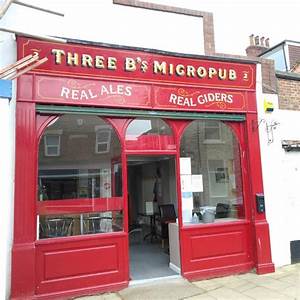
Nowadays, there are theme pubs (for special groups of people), micro pubs (one tiny room), country pubs (with rural décor), karaoke pubs (for people who want to sing in public) and gastro pubs (for fine dining – that means good food).
l think though, that the Rusty Anchor is the best of all.

Bye bye everyone – don’t forget to subscribe to my blog!
Love and kisses
Salty Sam

www.christina-sinclair.com

Bill and Bob’s Joke of the Week
Bob: l have ordered a chicken and an egg from Amazon.
Bill: Oh?
Bob: l’ll let you know.
Salty Sam © Christina Sinclair 2015
Unauthorized use and/or duplication of material from this blog without express and written permission from this blog’s author and owner is strictly prohibited.
Links may be used to www.christina-sinclair.com
Picture Gallery

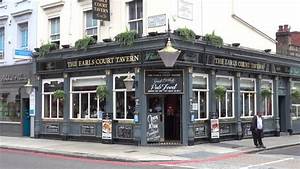
Pub sign

Menu

Coaching inn

Victorian pub
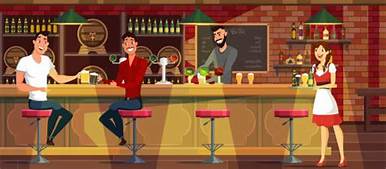
Modern bar stools are high
 THE SALTY SAM NEWS DESK

This week, Bill, Bob, Emily and Henry set some questions for their team to ask the other teams at the Friday afternoon quiz in Miss Pringle’s class at the Rocky Bay Primary School.
Quiz nights are popular in some pubs, so I think they will grow up to make good pub quiz team members.
Playing games like this seems to have improved their general knowledge no end!
Can you answer their questions?
- Who was Elvis Presley?
- In what month does the Chelsea flower show take place?
- Which primary colours make purple?
- Which primary colour is the opposite to purple?
- What is wildwood?
- What is Britain’s largest bird?
- What is a helter-skelter?
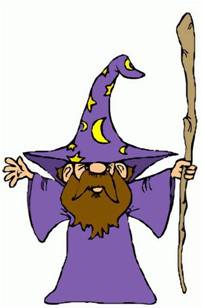
- What is a staff?
- What is the shape of the side of a cube?
- What animal can be called a canine?

*********************
*********************
 Quick Quiz
What word follows these?
- side occasional coffee
- arm dining padded
- beer crystal window
- jam honey crock
- swing car revolving
- road neon danger
- storage mail juke
- petrol air beer
- milk glass wine
- private saloon iron
lt’s the Weekend!

HOW TO MAKE A HEATlNG PAD COVER
If the nights are getting a bit chilly, and you need to take a heating pad to bed with you, this cover will give it a bit of extra protection. This November 5th was the warmest on record, but the temperatures will drop, so you can start knitting for when that happens.

HEATING PAD COVER
Using 4mm knitting needles cast on 45 stitches
Knit 2 rows of garter stitch
Knit 4 rows of stocking stitch
Knit 2 rows of garter stitch
Slip 1 (knit 1, purl 1) repeat last 2 stitches to end
Repeat the last row 89 times (90 rows of moss stitch)
Knit 2 rows of garter stitch
Knit 4 rows of stocking stitch
Knit 2 rows of garter stitch
Knit 12 rows of stocking stitch
Knit 6 rows of garter stitch
Cast off
TO MAKE UP
Using over-sew stitching and right sides together sew up the bottom and sides.
Crochet 110 chains into a length of yarn and thread this cord into the bottom channel of the cover

Please note that the material on this blog is for personal use and for use in classrooms only.
It is a copyright infringement and, therefore, illegal under international law to sell items made with these patterns.
Use of the toys and projects is at your own risk.
©Christina Sinclair Designs 2015
Answers to the News Desk Quiz
- Who was Elvis Presley? – a singer who found big fame in the 1950s
- In what month does the Chelsea flower show take place? – May
- Which primary colours make purple? – red and blue
- Which primary colour is the opposite to purple? – yellow
- What is wildwood? – woodland that has been nothing else but woodland since the last Ice Age
- What is Britain’s largest bird? – sea eagle/white-tailed eagle
- What is a helter-skelter? – a curly slide at a fairground
- What is a staff? – a long pole held in the hand – often held by a wizard
- What is the shape of the side of a cube? – a square
- What animal can be called a canine? – a dog

Quick Quiz Answers
- table
- chair
- glass
- pot
- door
- sign
- box
- pump
- bottle
- bar