Salty Sam’s Fun Blog for Children
Number 602
The Princes in the Tower
Hello Everyone
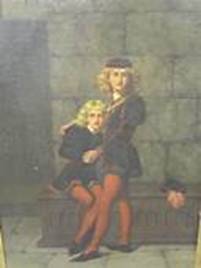
The title of this week’s blog post sounds like the title of a fairy tale, doesn’t it?
But it is, in reality, one of the greatest unsolved crimes in British history.
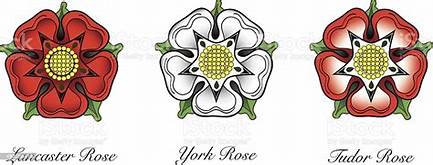
ln the War of the Roses, the Houses of Lancaster and York, two branches of the royal family, fought over the throne for a period of ten years. They took a red rose or white rose as a symbol for their branch of the family.
Henry Vl from the House of Lancaster was killed by Edward lV who then became the first Yorkist King.
He was a ruthless king who was capable of murdering his own brother, George for betraying him.
Rulers were like that in those days!
Another brother, he made Duke of Gloucester, giving him much power in the north of England. His name was Richard. He became Richard, Duke of Gloucester.
Edward lV was married to Elizabeth Woodville.
She was unpopular with the people, but she gave the king ten children.
The eldest daughter was Princess Elizabeth, named after her mother.
There were also two sons called Prince Edward and Prince Richard. These boys were the only two surviving male heirs.
Prince Edward was next in line to the throne.
He grew up in his own castle in Ludlow, which is in Shropshire. He was taken there at only three years old.
There was a household of staff that protected him and brought him up.
The Queen’s brother, Anthony Woodville tutored the young prince and gave him an education fit for a king of those days. He was also given training for battle. Boys of fourteen could go onto a battlefield to figh,t and Edward lV had started his warrior career at thirteen!
Without parents or brothers and sisters around him, Anthony Woodville became like a father figure to the young Prince Edward.
Then suddenly and unexpectedly, in April of 1483, after a short illness, King Edward lV died.
At the age of only 12, Prince Edward became King Edward V.
The new king was so young that he needed advisers to help him run the country – and whoever advised the king would control the country.
Richard, Duke of Gloucester was given the role of the king’s protector as per the instructions of his father given before his death.
He was to be Lord Protector.
But the Royal Council did not want Richard to have total control of Edward, and met in London to discuss matters.
The Woodville family did not want Richard in control either, because they feared that their high position in the kingdom would be under threat.
A battle for power was to follow.
The Woodville family together with the Royal Council decided that Richard should not be Edward’s only adviser, and also that the young king should be crowned without delay.
So Edward set off to London with his Uncle Anthony.
At the same time, his Uncle Richard left York with a large army of thousands of men and caught up with Edward in Stony Stratford in Buckinghamshire.
Richard and Anthony spent an evening together talking.
The next morning, Richard had Anthony arrested and took Edward into his own custody.
Not long after that, Anthony was executed and out of Richard’s way.
Then Richard took Edward to the royal palace of the Tower of London.
Edward’s mother then headed down to London taking Edward’s younger brother Prince Richard with her. There, she took refuge in Westminster Abbey.
Richard summoned more help from York, and surrounded Westminster Abbey with his troops. He said he wanted the two young brothers to be together when Edward was crowned and the young Prince Richard, who was nine years old, was taken to the Tower of London to be with his brother.
Elizabeth gave up her son because she thought with the Royal Council’s support he would be safe, and she would see both her sons again after the coronation.
But then the coronation was postponed.
At first, the two princes played together in the gardens, and the palace was a nice place for them to live.
But eventually, they were held only in the inner apartments, their servants were taken away from them, and the princes were seen less and less – until by the end of the summer, the princes were nowhere to be seen at all.
The tower where the princes were last seen was renamed many years later by the Victorians as the Bloody Tower – because it was thought by many, that the princes were murdered there one dark night – in their bed as they slept.
On the 6th July, Richard was crowned as King Richard lll in Westminster Abbey.
The princes were gone.
Many suspected that Richard lll had his nephews murdered so that he could seize power.
ln those days, the king had absolute power, so it was likely that he could get away with a crime like that and nobody would question him – unless they wanted to face him on a battlefield to challenge his position of authority.
There were no police in the way we have today to arrest people for murder, or investigative journalists to probe into any wrongdoings and bring them to public attention, and there were no politicians in Parliament to raise questions on television for everyone to see. Life was very different then.
Two years later, Richard lll (white rose) was killed at the Battle of Bosworth by Henry Vll (red rose).
This brought the War of the Roses to an end.
The Tudor Dynasty began.
Henry Vll married the vanished, young princes’ sister. She was called Elizabeth Woodville (white rose) – she had the same name as her mother, you will remember. She became queen – like her mother had been too.
Henry Vll’s son would become Henry Vlll, and his granddaughter, Elizabeth l – two of our most famous monarchs.
ln 1510, Thomas More, a man in the court of Henry Vlll, uncovered a confession dated 1502.
A man called James Tyrell, whilst being held in prison, confessed that he had been instructed to murder the two princes by Richard, Duke Gloucester, and had consequently employed two assassins Miles Forrest and John Dighton to carry out the evil deed.
The two men had gone into the tower where the prince’s slept and at about midnight had suffocated them with their bedding.
Was this true evidence – or a made-up story by the Tudors to give Richard lll, their former enemy a bad reputation? Losers of a war can often be discredited afterwards by the victors.
lt is the people who win a war that write the history books!
William Shakespeare certainly wrote about Richard lll as a villain. He got his information about Richard lll from writings by Thomas More.
Some historians think the princes were taken away and kept in captivity at a secret location; others say there are other suspects who could have murdered the princes.
But historians have found that Thomas More did meet up with one of the sons of Miles Forrest for sure, and Thomas More would have been around John Dighton and his two sons in the court of Henry Vlll. Historians know these two men did exist and also that Thomas More was known to be a truthful person – a man of honour.
ln 1674, the time of Charles ll, builders found two small skeletons buried in a wooden box at the bottom of a staircase in the Tower of London.
The king saw to it that the bones were put in a burial urn. This was then placed in a niche in Westminster Abbey and there was a proper funeral ceremony to honour the two boys.
Did these bones really belong to the princes though, or was it a wrong assumption?
The most up-to-date forensic methods have not been used on the bones to determine the truth of the matter. People are sensitive about disturbing graves because it seems disrespectful. But scientists nowadays could know for sure, if they carried out an investigation.
They were able to identify Richard lll’s body when it was discovered under a car park in Leicester in September of 2012. The discovery made headline news all over the world. His DNA would be similar to that of the princes because they were related by blood.
After the amazing discovery of the body in the car park, many people started a passionate campaign to restore Richard lll’s reputation. They said he was an anointed king (made a king in a religious ceremony) who deserved respect because of that fact.
He was duly reburied in Leicester Cathedral with stately ceremony, and there were members of the modern Royal Family in attendance.
Historians can continue to argue about what really happened to the princes and many theories have been put forward. But most people think that Richard lll ordered their removal once and for all.
We know he had a motive. We know he had had other men executed so was capable of ordering people to death. But do we really have solid evidence?
Then quite a lot of new evidence emerged after much modern investigation, and seemed to point to a different story being the truth. lt is possible that the princes survived their imprisonment in the Tower, were separated and smuggled to the continent each staying with their aunt, Richard lll’s sister, in her house there for a while. Her name was Margaret, Duchess of Burgundy.
Later, they both individually returned to England to try and claim the crown as their rightful inheritance – with an army in tow.
Edward, the elder brother, fought at the battle of Stoke in 1487 and maybe died there. lt was the last battle of the War of the Roses.
And the younger brother, Richard Duke of York, stayed in safety with his aunt, and then returned to England with her support to try and claim the crown.
His first attack was in 1495.
He was unsuccessful and fled to the Scottish court for protection. There, the Scottish king, James lV found him a wife.
Two more attacks were launched, but they both failed.
The English king, Henry Vll, found the leader of the attacks.
He was captured and forced to sign a pre-prepared confession.
He escaped, was recaptured and put back in a dungeon in the Tower of London, where he was tortured, then executed for treason.
Although he was going under the name of Perkin Warbeck, (the name sounds like ‘for the king, war will break out’) he was executed for treason (an enemy of the state) as though he was a nobleman not a commoner. He was hanged rather than sentenced to the hideous death of being hung, drawn and quartered, which was the usual death of a traitor.
One thing is for certain though.
The people who now work in the Tower of London report that once the tourists have left, and the premises fall quiet for the night, they can sometimes hear the voices and footsteps of ghostly children playing in the rooms of the tower where the princes were last seen.
What do you think?
Bye bye everyone – don’t forget to subscribe to my blog!
Love and kisses
Salty Sam

www.christina-sinclair.com
Bill and Bob’s Joke of the Week
Bill: Do you know why King Kong climbed the Empire State Building?
Bob: Yes, it was because he could not fit into the lift!
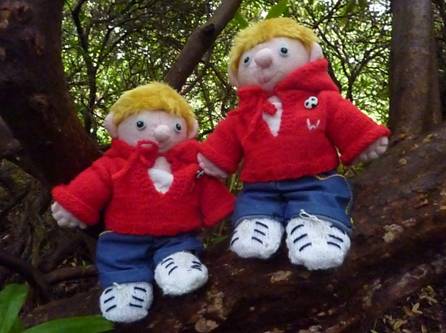
Salty Sam © Christina Sinclair 2015
Unauthorized use and/or duplication of material from this blog without express and written permission from this blog’s author and owner is strictly prohibited.
Links may be used to www.christina-sinclair.com

Picture Gallery
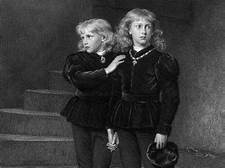
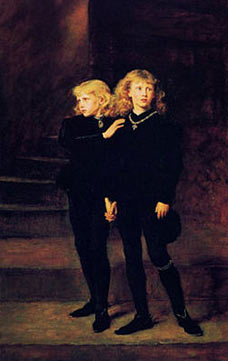
A Victorian depiction of the Princes in the Tower
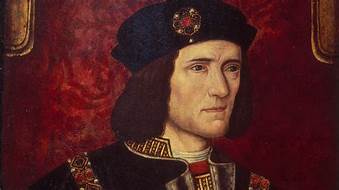
A portrait of Richard III
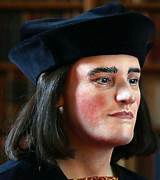
A reconstruction of his head
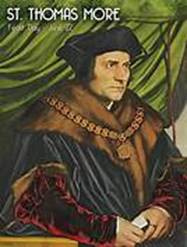
Thomas More
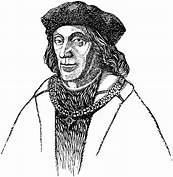
Henry VII
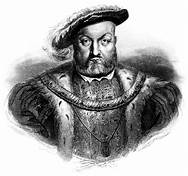
Henry VIII
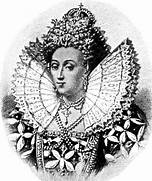
Elizabeth I
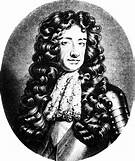
Charles II
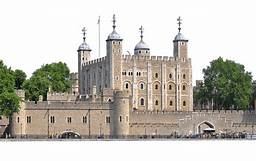 The Tower of London
The White Tower is in the middle
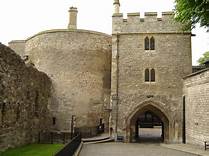
The Bloody Tower
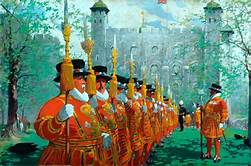
The Tower of London today
 THE SALTY SAM NEWS DESK


Sorry about all the Richards and Edwards in the story this week. Using the same names did get a bit confusing!
But I couldn’t help it.
Something I could help with though, was Bill and Bob’s plan to put some more nesting boxes up in the Rocky Bay Woods before their summer holidays were over.
Of course, the birds won’t be building nests now until next spring, but you can put nest boxes up well before that time in order for the birds to get used to them being around and part of the landscape.
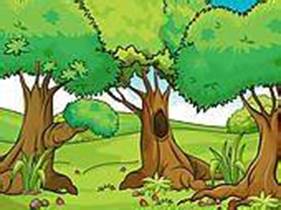
Usually, every hole in a tree anywhere in a wood will be inhabited by a creature of some sort. There will be squirrels up high and hedgehogs at the base of the trunk – and of course all manner of birds in any size hole that suits them.
Owls and kestrels are amongst the largest of the birds that nest in tree holes, and blue tits and wrens are amongst the smallest.
But unless there are a lot of old trees and even dead trees in a wood to provide holes for homes, providing more living accommodation with nest boxes will really help stop fights over nest sites in the woods next year!
Nest boxes in the woods can be quite roughly made – just as long as they are sturdy and won’t fall apart, and there are no sharp edges or nails sticking out to injure any wildlife.
You want them to keep dry inside as well.
They don’t have to have the best of finishes.
They don’t have to be painted bright colours either.
It is better to have boxes that fit well into their environment rather than stand out.
A wooden nest box tucked up in a tree will blend in well to its environment but the birds will be able to find them and choose which box they like the look of in their house-hunting expeditions.
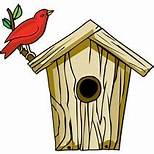
I have started to teach Bill and Bob some wood-working skills and banging some nails into some pieces of wood we cut into pieces was a good place to start.
Of course, bigger birds will need bigger boxes. Owls and woodpeckers need more room to move about in than blue tits and robins.
They will take the responsibility of furnishing their home once they move in.
They will build up a nest inside a box with small sticks, leaves, feathers and anything else they can find to make themselves comfortable in their home.

One of the most famous hole-nesting birds is the woodpecker.
They claim their territories in early spring. They drum to make a noise instead of singing.
We hear them in the Rocky Bay woods, but although you can hear them at quite a distance, they can sometimes be very hard to spot.
They drum on wood to make their presence know to potential mates and rivals too.
The drumming can be rapid rapping or like someone knocking on a door.
Woodpeckers cling to vertical trunks with their sharp feet and try out different branches to see which makes a sound that they like.
They especially like to look for hollow, dead branches because they make the loudest noise – just like a drum!
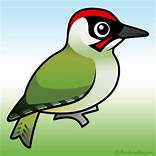
We have three kinds of woodpeckers in this country: the greater spotted woodpecker, the lesser spotted woodpecker and the green woodpecker which makes a kind of shrill, whining call out in the woods. It has a green body and a red cap on its head.
There are many different species of woodpecker all over the world, although they are not found in Australia, New Zealand, New Guinea or Madagascar.
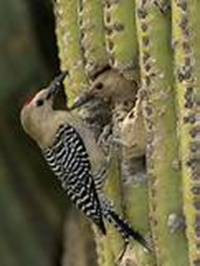
Most of them live in forests, but some live on rocky hillsides and one type even lives in large desert cacti!

*********************
*********************
 Quick Quiz
Do you know what these words and sayings mean?
- out on bail
- on remand
- a flight risk
- red tape
- a jailbird
- doing time
- in stir
- doing porridge
- in the dock
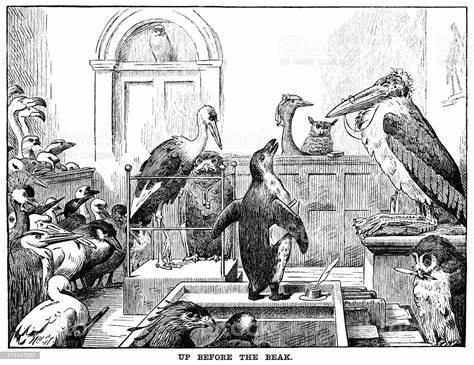
- up before the beak
- a brief
- solitary confinement

lt’s the Weekend!

HOW TO MAKE A PAPER PLATE FRlSBEE
Here is a frisbee you can make to play with in the garden before we lose the summer weather altogether.
You will need two paper or plastic plates.

Cut a hole in the centre of each one about 7cm/3 inches across.
Decorate the underside of the plates if you would like to.

Glue around the rims and stick the two plates together top facing top – so that your frisbee is the shape of an alien flying saucer.
You could even put windows around the side to make it look like an alien spaceship.
Add some sticky tape on at least four places to ensure a good seal.
Wait for the glue to dry before you start playing with your new toy. Please note that the material on this blog is for personal use and for use in classrooms only.
It is a copyright infringement and, therefore, illegal under international law to sell items made with these patterns.
Use of the toys and projects is at your own risk.
©Christina Sinclair Designs 2015
Quick Quiz Answers
- out on bail – released from custody once bail (a sum of money) has been paid to the court to ensure the accused will attend their trial
- on remand – being kept in prison before a court has come to a judgment of guilty or not guilty
- a flight risk – a person who is judged likely to run away if put on bail
- red tape – bureaucracy – all the legal paperwork you have to fill in or take account of
- a jailbird – a person in prison
- doing time – in prison
- in stir – in prison
- doing porridge – in prison
- in the dock – standing in a box in a courtroom – this is where the person accused of a crime stands
- up before the beak – before a magistrate
- a brief – a barrister
- solitary confinement – being put in a prison cell with nobody to talk to
Some of these terms are formal and some are informal language