Salty Sam’s Fun Blog for Children
Number 592
Stonehenge
Hello Everyone
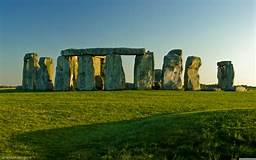
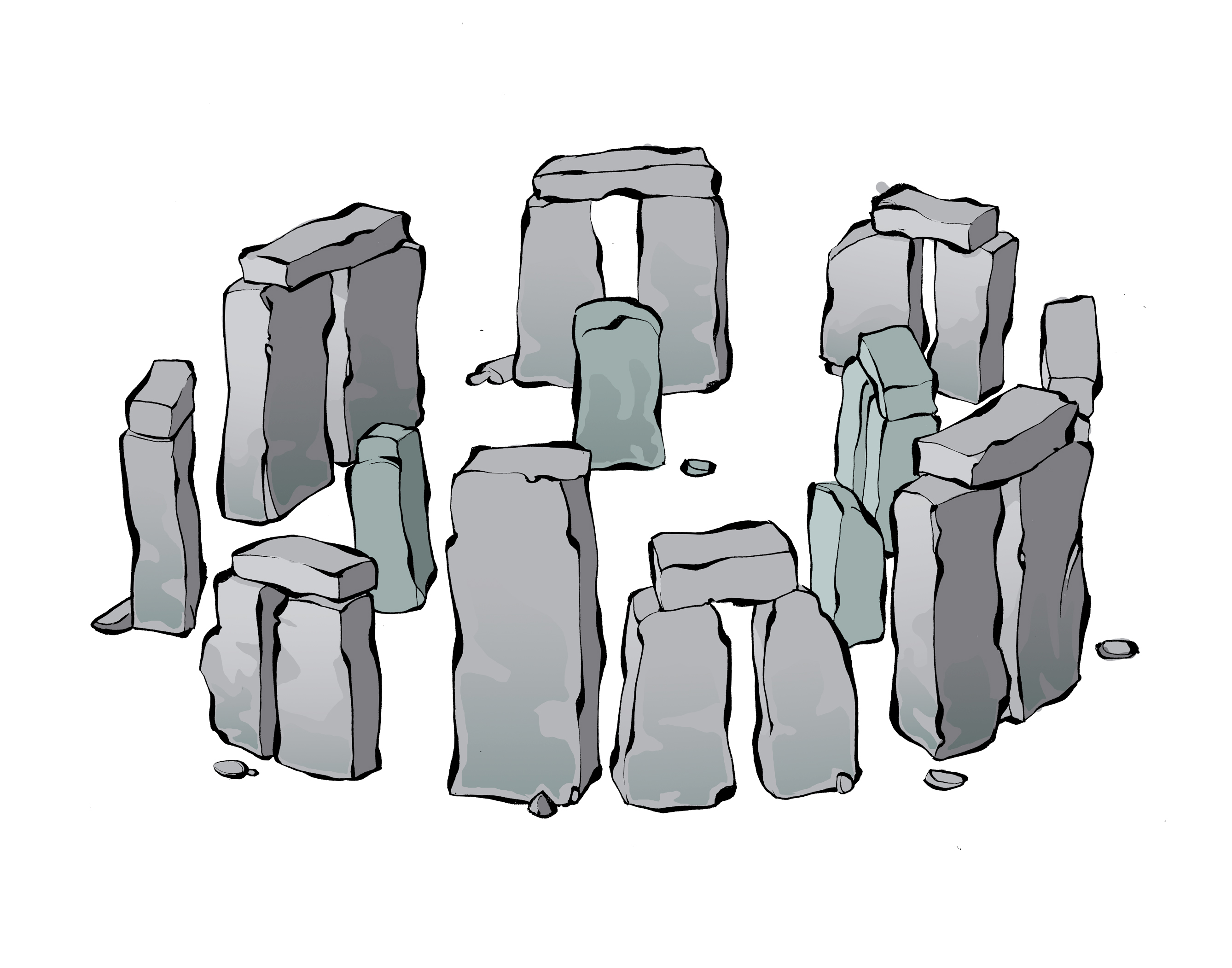
Do you recognise the structure in the picture at the top of this week’s blog post?
lt is Stonehenge; one of the most famous prehistoric structures in the world. lt is visited by thousands of tourists every year from all over the globe.
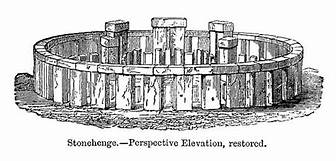
lt is a bit tumbled down now, but you can imagine what it would have looked like when it was first built. Stonehenge is the most famous henge in Britain.
Prehistoric means a time before written records. Prehistoric history is mainly determined by scientists gathering evidence of what remains from this time – anything that has not rotted away.
Historians and archaeologists have debated as to what the purpose of Stonehenge was exactly, and why it was built, for many centuries. But now, after much investigation, they have concluded that was actually used in different ways at different times over the centuries.
Just like a large, old Victorian house that became too big for just one family to occupy was maybe sold to someone who used it as a private hospital or convalescent home (a place for people coming out of hospital to make a full recovery) and then later to someone who wanted to use it as a school, and eventually someone who wanted to turn it into some flats, Stonehenge was used for different purposes at different times through the ages.
Some people have said that Stonehenge was a landing marker for alien flying saucers. l have to say that l have found no evidence that that is true!
Originally, it was built as a celestial temple; a meeting place for probably only the elite to worship. They may have processed up to it from a landing place in the river.
lt became spectacularly famous far and wide and eventually became a trading centre for valuable items like metal objects.
For a long time, it was a healing centre where people came to try and find cures for ailments and injuries because they believed the stones had healing properties.
(Even today people will sit in henges when they have broken bones and say that their bones heal more quickly because of it. ls this country superstition or medical fact?)
Then the whole area around Stonehenge became a burial ground. There are hundreds of graves and cremated remains (ashes) and there were some burials from the earliest of times.
Nowadays, neo-pagans (modern pagans) congregate at Stonehenge to celebrate the summer and winter solstices. They are probably on their way there now, as l speak.
Modern pagans can be druids, witches or shamans. There are other groups too.
The Archdruid of Stonehenge, the most senior druid in the UK, leads the annual solstices and equinox ceremonies at Stonehenge.
Druids usually wear white gowns, and witches very often wear black (not because they are bad, but because black is a colour that contains all the colours of the rainbow and each colour has a significant energy. They also often have secret missions to undertake under cover of darkness and wearing black helps to camouflage them).
Druids, witches and shamans can be male or female. They are from the old nature religions.
Paganism is the oldest religion in the world. lt is still the dominant religion in some regions of the world. All people were pagans at the time when Stonehenge was built.
And Stonehenge has been standing for a long time.
lt was built about 4,500 years ago. This was before the wheel was invented and before metal working was invented – that is to say before people were making objects out of metal. Archaeologists are still not quite sure how the enormous stones were transported to the site.
And why was this site chosen?
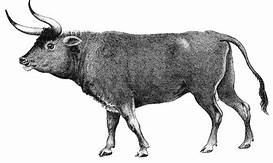
Well, it seems that pre-historic people used to congregate to hunt wild aurochs across this windswept plateau and a hunt like this would have been a huge event for them.
Aurochs were mega-cows and anyone bringing one down in a hunt to provide a lot of food for the tribe would have been a super hero for a long time to come!
We know how revered these animals were to prehistoric people because of the fact they were featured in cave paintings.
They were hunted with sharp spears – long pointed sticks.
Any sharp implements (tools or weapons or spear-heads) at the time would have been made of flint. Flint is stone that can be easily shaped by hitting it – it splits easily and has very sharp edges once in pieces.
Evidence that three wooden totem poles stood on the site of Stonehenge 10,000 years ago, tells us that a monument stood on the wide plateau (now called Salisbury Plain) a long time before Stonehenge was built to mark it as an important and also probably sacred place.
Two auroch jawbones were symbolically buried at the southern entrance to the stone circle that now stands.
The plain is also littered with thousands of animal bones and horns all buried underground. They come from ravens, dogs, cattle, pigs and foxes and also animals which we don’t have anymore like: bison and wolves – what l mean is, that they don’t live in the wild in modern Britain.
There are hundreds of deer antlers buried in the circular ditches outside the henge.
Ancient people managed to raise 165 colossal stones into a standing position to create an imposing circle. We know that it had religious significance to the pagans because they were nature worshippers and saw divine presence in all living things. This included the Sun, the Moon, the Earth and the stars, the circular movement of the seasons and of life, death and rebirth too.
They also believed that physical circles contained powerful energies.
Looking out from the vast plain, the stars would have been clearly visible. This would have been a very different view compared with a clearing in a forest. The stars moved into different positions on a yearly cycle.
The cycle of the year would have been important to those ancient peoples.
lncluded in the construction of Stonehenge, there are stones that align to sunrise on the longest day. and sunset on the shortest. The mid-summer sun rises above what is called the Heel Stone.
The longest day of the year is the summer solstice; also called Litha, and the shortest is winter solstice, or Yule.
ln the very north of Britain, in Lerwick, there is only 5 hours and 49 minutes of daylight on the shortest day; in the south where Stonehenge is, it is nearer to 8 hours (just under).
Yule was very much a time of celebration because it was a turning point in the year when the Sun was beginning to give more hours of daylight and gain strength. Without the sunshine, plants would not grow and give the people food to eat.
ln prehistoric times, Stonehenge was massively famous and drew people to it from across the land and from the continent beyond (now called Europe).
Stonehenge must have been an awesome and imposing sight in the landscape.
We know that people travelled widely at this time because there are chemical signatures found in the dental enamel of skeletons that have been dug up in the area which tell us which regions these people grew up in.
The water they drank as a child had certain minerals in that created these signatures, and different locations in the world have a different combination of minerals that are present in the spring water (or water from the ground) that they drank.
Whether because of trading or family ties, people were very mobile at this time. The things buried with the bodies in the graves (called graves goods) could be from as far as ltaly and Greece or northern Scandanavia.
There are five arches in the centre of Stonehenge arranged in the shape of a horseshoe. They are constructed of stones known as sarsens. They are 13 feet tall and 7 feet wide and are made of sandstone which was locally sourced.
Then around them is a circle of a rock known as bluestones. These are a kind of volcanic rock called dolerite. There are 80 of them and they were probably the most important component of the temple.
They were brought 140 miles from the Preseli Hills in Wales. How this was done is still not exactly known. They could have been brought by raft along the coastline and then up river. They may have been put on sledges and rolled along on large logs. Whatever way it was done, a lot of effort was put into procuring (collecting) these stones and they must have had huge significance.
They were probably thought to have special powers. Today the spring water of the Preseli Hills is fabled to have healing properties.
For a long time, archaeologists wondered why people went all the way to Wales (as it is today) to bring the stones to England (as it is today).
But then they discovered that there was another circle before the Stonehenge we see today.
The stones on this site were rearranged several times. The original circle from about 5,000 years ago was larger and simpler at about 110 metres across and was made from only blue stones from West Wales. These stones may well have stood in these hills for 400 years before being moved.
The stones were not fetched to Salisbury Plain, but brought with people who lived in the Welsh hills. They brought them with them when they came to live in a different place.
So now – the inner stones came from Wales, the outer stones from England and the Altar Stone, at the centre of the construction, from north-east Scotland. The stones came from all parts of Britain.
The site may have been chosen because of naturally occurring lines in the ground that match up with the rising of the Sun at Solstice.
Encircling the blue stones is another outer circle of sarsens.
The sarsens have lintels (the stones lying across the top of the upright ones) on them. These lintels were raised up on platforms. The platforms were built up little by little until the lintels were of the right height to be moved over and into place. The lintels were shaped with tongue and groove joints at the sides so that they would fit more securely together. (That means sticking out bits on one stone that fitted into a groove on the one next to it.)
There were humps and hollows to fit the underside of the lintels to the tops of the sarsens as well. They were in fact, shaped a bit like enormous Lego bricks!
Stonehenge is the only prehistoric stone circle with lintels in the world.
There are sacred standing stones with lintels on the top as far away as the other side of the world. lt was obviously an important thing in the ancient world to create large, stone monuments that looked a bit like doorways.
Later, many axe-head-shaped symbols of different sizes were etched into the surface of the stones using metal tools. This happened when the monument was already old; about 1,800 years ago. At this time, there were many human burials in the land around Stonehenge. Were these symbols creating a memorial wall for the people buried around this ancient sacred site? Were the symbols put there like we would mark graves with tombstones today?
Then even later than that – we are talking about around the 600s (7th century), some of the skeletons were found to have had their heads removed – probably because of execution. They lived in a time when Christianity had become the dominant religion in Anglo-Saxon England.
People who had committed terrible crimes were often not buried in consecrated (declared blessed and sacred by a priest) church yards. They were obviously outcasts who were banished to the heathen grounds like outcasts from society.
A nearby Neolithic site, called Woodhenge, which was made with wooden posts, not standing stones, was, on the other hand, associated with the living, and may have been a kind of Stone Age disco, what l mean is, lots of dancing, celebrating and feasting and having a good time generally.
But pagans of today still think of Stonehenge as a sacred place.
They believe that it helps connect them to the natural word, the heavens and the past. lt is a portal (entrance way) of connectivity.
You can’t walk up and touch the stones anymore if you go to visit.
The stones are roped off to protect them.
But you can mingle amongst the stones on the solstices.
Stonehenge became a UNESCO World Heritage Site in 1986.
An exhibition of artefacts relating to Stonehenge was on show in the spring and summer of 2022 at the British Museum.
Stonehenge is owned by the crown and looked after by English Heritage nowadays, and if you can’t get there for a solstice gathering, they organize live streaming on You Tube of the event and you can watch it from anywhere in the world – this weekend actually!
Bye bye everyone – don’t forget to subscribe to my blog!
Love and kisses
Salty Sam

www.christina-sinclair.com
Bill and Bob’s Joke of the Week
Bob: What do you want to be when you grow up?
Bill: Well, l don’t know, but it would have to be something really interesting to do, you know, really riveting.
Bob: Something riveting? Well, that would be a welder then!
Salty Sam © Christina Sinclair 2015
Unauthorized use and/or duplication of material from this blog without express and written permission from this blog’s author and owner is strictly prohibited.
Links may be used to www.christina-sinclair.com

Picture Gallery
Auroch
Stonehenge as it was built

Flint and bone tools and weapons
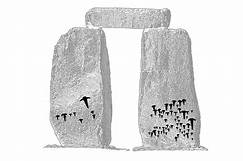
Metal axe-head depictions
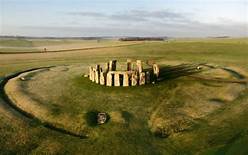
A popular tourist draw
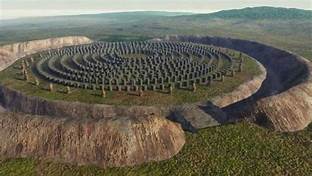
Woodhenge is about 2 miles from Stonehenge

Woodhenge today


Pagans today

Druid
 THE SALTY SAM NEWS DESK

This week, something very strange and unusual happened in Back Lane.
Bill and Bob had gone around to Emily’s cottage to play.

No, that wasn’t the strange thing.
It was what happened when they got there that was strange.
As you already know, Bill and Bob live in Primrose Cottage at one end of Back Lane, and Emily lives in Periwinkle Cottage at the other end.
The children were playing in Emily’s bedroom at the back of the cottage.
But at one moment, Emily decided she wanted to get something from her Mum’s bedroom at the front of the cottage, and as she passed by the window in there, she happened to notice something strange outside.
There was a man outside that she had never seen before – and what was more he was hanging around her next door neighbours’ new car which was parked outside their house.
He looked very furtive and suspicious.
He was looking up and down the street – which was deserted at the time.
But he did not notice a little girl standing behind the net curtains in the window above him.
Emily watched quietly.
The next thing the man did was open the car door, get inside and bend down under the dashboard where he seemed to start fiddling about with something there.
It wasn’t a sensible thing to do; to leave a car unlocked.
I would say that most people in Rocky Bay are pretty honest. But at this time of year, there are lots of tourists milling about the town, and as Emily did not recognize the man; she though he must be a visitor.
She rushed downstairs straight away to tell her mum what she had seen.
Her mum was cooking in the kitchen. She wiped her hands and phoned Constable Bobby straight away.

While Emily’s mum was on the telephone, Emily rushed upstairs to tell Bill and Bob what was going on.
They all crept into the front bedroom again and peeped over the windowsill to watch.
The man in the car did not have an ignition key to get the car started, and was trying to get the neighbours’ beautiful, new car to start in another way.
It took him so long to do this, that Constable Bobby caught him before he managed drive away.
The thief was caught red-handed!
It turned out that he was a serial car thief and the police was very glad to catch him.
The children watched all the excitement happen.
Emily’s mum was very proud of her.
Constable Bobby was very pleased with Emily too.
The police are always very pleased when children act as their eyes and ears!
Children can be very clever at observing things that are happening without being noticed.


*********************
*********************
 Quick Quiz
Do you know what these words mean?
- scepter
- chalice
- waxing and waning
- talisman
- monolith
- lair
- entwined
- stave
- wildwood
- cavern
lt’s the Weekend!
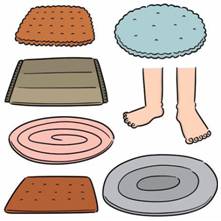
HOW TO MAKE A DOLLS’ HOUSE MAT
This is a very easy rug to make as long as you can cope with a lot of stitches on your needle.
Use dk yarn and choose whatever colour you would like to use to match the decor of the room you want to put it in.
Simple cast on 230 stitches and then cast them off.
Stitch this long piece of knitting into a curl and keep sewing until you have a mat.
If you can’t manage so many stitches – you will just have a smaller mat!

Please note that the material on this blog is for personal use and for use in classrooms only.
It is a copyright infringement and, therefore, illegal under international law to sell items made with these patterns.
Use of the toys and projects is at your own risk.
©Christina Sinclair Designs 2015
Quick Quiz Answers
- a scepter – a baton that denotes authority
- a chalice – a cup
- waxing and waning – getting bigger and smaller – like the Moon
- a talisman – a lucky charm – maybe a stone or piece of jewellery
- a monolith – a single rock that becomes a geographical feature
- a lair – a place to hide and wait – associated with dangerous animals
- entwined – twisted up together
- a stave – a wooden pole (or plank)
- wildwood – woodland that has been nothing else but woodland since the last lce Age
- a cavern – a cave-like place
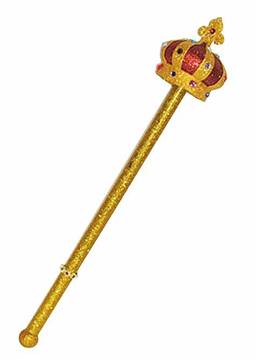
Sceptre
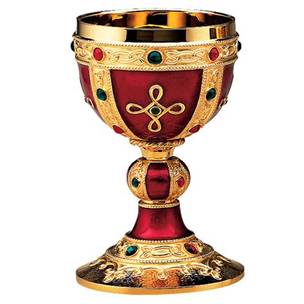
Chalice
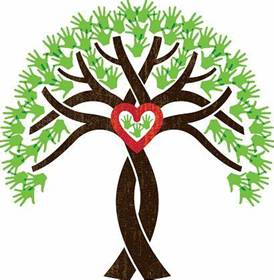
Entwined