Salty Sam’s Fun Blog for Children
Number 590
Large Forests
Hello Everyone
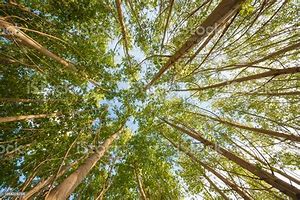
Bill, Bob, Henry, Emily, Captain Jack and l went for a walk in the Rocky Bay Woods this week to check on the trees we planted there a while back in a project that Bill and Bob had dubbed ‘Operation Muddy Hole’.
All our trees looked happy and healthy.
Actually, we planted them beside the wood in a lower corner of one of Farmer Jenkins’ fields. We have extended the wood and any new trees planted beside this ancient woodland will help to protect and invigorate the woodland that already exists.
This is called a buffer zone.
The Rocky Bay Woods are in fact wildwood. That means that nothing has grown on that land since the last lce Age about 10,000 years ago; we know this because of the species of flowers we see growing there.
They are called indicator species.
They are wild bluebells, primrose, wood anemone and wild garlic.
lf you know what you are looking for, there are also lichens and insects that are indicator species too.
You are not allowed to pick or dig up wild flowers. But sometimes volunteers help to clear woodland of invasive species like rhododendron.
Once the Wildwood covered virtually the whole country, except from some heath land and glades, and now only fragments of it are left.
And still this ancient woodland is being destroyed in order to build houses, golf courses and roads.
The wood-wide web that exists in the soil is irreplaceable.
The wood-wide web is filaments of underground fungi that plug into the tips of the roots of the trees and can join groups of trees together in networks.
The whole wood can be joined together by these microscopic networks.
Nutrients pass between trees and fungus and also chemical and electrical signals too so that trees can communicate with each other in a language all their own.
Some trees decide to try and attack others with toxins to try and out-compete them. But most try to help each other, and dying trees can even send spare food reserves to their neighbours.
ln areas where there is very little rainfall, trees grow very long roots to dive down and search for water underground. The trees in a community will connect their roots together so that if any tree does find water it can share it with others.
Amazingly, some trees have the ability to recognise that a sapling has grown from their own seeds and channel resources to it through the underground connections in order to give it a helping hand.
New trees planted next to older woodland trees will link to the established trees through the underground networks in time.
Forests all over the world work in the same way.
But many forests all over the world have been lost.
They are needed more than we realize. They need to be protected and replenished.
ln the natural order of things, forest regenerate themselves. Old trees become very brittle when they die and eventually fall over. They can take up to one hundred years to decay away to a dust which then becomes part of the soil. Old and decaying wood becomes home for: moss and lichens, beetles and snails.
But all the time new trees will be growing to take their place. You can roughly tell the age of a sapling – when you consider that young trees grow about a foot (30cm) a year.
ln Brazil, most de-forestation has taken place to make way for cattle ranches. African cattle grass was planted in its place and this was able to out-compete the native plants. The ancient and fragile soil was often washed away in heavy rains.
But experiments have proved that if trees are planted back, all other life will come to inhabit the area again: insects, animals and flowers. Precipitation (rain drops) collects in the leaves and roots of the forest and the soil is protected.
Most of the biggest forests in Britain nowadays are found in Scotland, and some of those were planted by humans.
Do you have meat-free meals sometimes to help save the planet?
Cows burp a lot of methane out when they eat. This methane goes into the atmosphere.
The more plants we eat instead of meat, the more space there will be for wild plants. Because there are so many different species of plants with different needs and characteristics, almost every terrain in the world can support plant life, even when the soil seems very poor.
The foods you can get protein from are Quorn, nuts, peas, soy and a variety of pulses like: lentils, chickpeas, butter beans and kidney beans.
The biggest plants are trees.
There are broadleaf trees that lose their leaves and conifers that have leaves that are needle-shaped.
Forests can contain one or both types.
Forests cover about one third of the surface of our planet. The biggest orchard in the world would be the almond orchards in the Central Valley of California. These orchards cover one million acres.
Having a mixture of trees in an area tends to lead to a healthier ecosystem, and they will support a variety of wildlife. This is called biodiversity.
There are four types of forest. The climate in an area will dictate what kind of forest will thrive there. Some are planted by humans but most self-seed and regenerate themselves given enough time.
Tropical forests near the equator are warm all year round and have high rainfall. They have the largest diversity of wildlife of any land habitat.
Diversity is better than monoculture for wildlife. That means that lots of species living together is better than just one type of plant or tree planted in a large area.
Subtropical forests are not as hot, and have a cool season.
Temperate forests are found in regions away from the equator and have four distinctive seasons. Some of the animals that live there will hibernate or migrate during the coldest weather. A lot of the trees are deciduous, which as you know, means they lose their leaves in winter. These are the kind of forests found in Britain, most of the northern part of Europe, southern Scandinavia, the eastern part of the USA, eastern Australia, Japan and the very southern tip of South America.
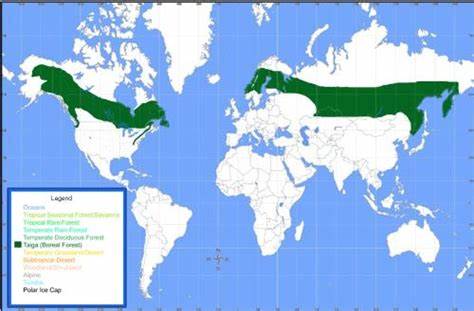
The Boreal forest is the largest forest of them all. The word boreal means northern.
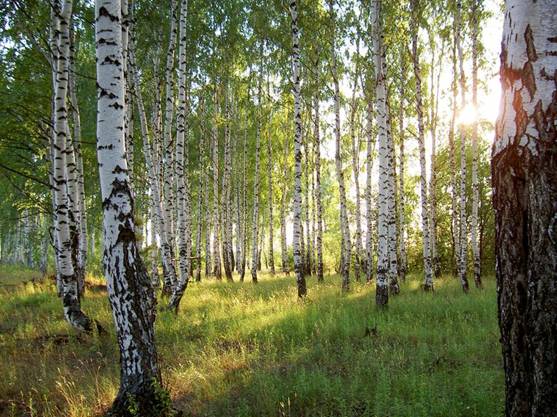
lt stretches for thousands of miles across Alaska, Canada, Norway, Sweden, Finland, Russia, China and Japan and contains about 750 billion trees; both coniferous and deciduous, like birch and alder.
lt is about 30% of the forested area on Earth.
All winter, it is smothered in deep snow. The snow lies for many months.
Animals that live there can survive in the very cold temperatures that last for over half of the year. Animals like bears, caribou, wolves and foxes have warm, winter coats.
ln the far north, where there are sub-arctic temperatures, only coniferous trees can withstand the lowest temperatures to be found there. These trees are fir, pine, spruce and larch.
lndustry in the boreal forest produces a lot of lumber and material to make paper. But you won’t find huge populations of people living there.
There is no industry in the Rocky Bay Woods – apart from birds building their nests and squirrels building their dreys, that is!
lf we are really lucky, we will see some roe deer too. They are the most widely-spread deer species in the UK. So if you live in or visit the countryside near where you live, you may well see some too.
After we checked up on our trees, we carried on walking around the farm, and saw gaps in the hedgerows that Bill and Bob thought they could plant some of their little, home-grown trees in.
You can put container grown trees into the soil at any time of year.
So we went up to the farmhouse to ask permission.
Bye bye everyone – don’t forget to subscribe to my blog!
Love and kisses
Salty Sam

www.christina-sinclair.com
Bill and Bob’s Joke of the Week
Bob: lt says here in the Rocky Bay Gazette that police were called to the recent Rocky Bay burping competition.
Bill: Really! Why?
Bob: They were going to make arrests for noise pollution, but in the end let the contestants off with a pardon!
Salty Sam © Christina Sinclair 2015
Unauthorized use and/or duplication of material from this blog without express and written permission from this blog’s author and owner is strictly prohibited.
Links may be used to www.christina-sinclair.com

Picture Gallery

Tropical Forest

Temperate forest in autumn

A forest of Euphrates poplar trees
Living in very dry conditions

The Boreal Forest – shown in green
You can see how the trees live together in two long networks

Heavy Snows

Conifers

Coniferous forest
Birch trees

Boreal Forest


Grizzly bear


Reindeer


Today, the 5th June, is World Environment Day.
The world needs more trees.
 THE SALTY SAM NEWS DESK

This week, Captain Jack and I went to visit Auntie Alice in Rose Cottage.
Bill and Bob were there too because they were staying overnight while their parents were out of town.
The news was on – like most children Bill and Bob find the news really boring.
Captain Jack and Auntie Alice started complaining about politicians and saying how they weren’t to be trusted. Your parents might be the same.
Bill and Bob thought it was all a big snooze fest.
(That means boring in case you don’t know.)
Auntie Alice said the politicians were changing their minds yet again, and crying wolf.
Bill and Bob didn’t know what ‘crying wolf’ meant and I thought that was a cue for a bedtime story.
I made it up as I went along – but the story is basically a famous one.
It was first written by Aesop, a story-teller in Ancient Greece.
I have rewritten it for the purposes of this blog. 😉
Would you like to hear it too?
Here goes…

Once upon a time, there was a small village full of busy, hard-working people.
There was a blacksmith, and a doctor, and a cheese-maker.
There was a storekeeper who kept a village shop full of food and useful things that anyone might need.
There was an inn where people gathered to drink ale in the evenings, and travellers could find a bed for the night there too.
The village was nestled in a valley high up in the mountains in a far-off place.
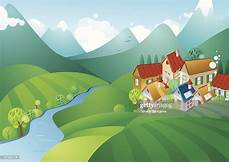
In the winter, there were heavy snowfalls, and in the summer the village was surrounded by meadows full of sweet grass starred with pretty, wild flowers.
On the edge of town, there was a hillside where sheep grazed during the summer months, and looking after the sheep was a young shepherd.
Beyond the fields, was a large, dark forest, full of scary animals and strange sounds.
The young boy was told by his master to look out for any wolf that might come out of the forest and if he spied danger, he should ring on the bell he had given to him, and shout loudly for help.
If a wolf came near the sheep, the villagers would help him drive it away.
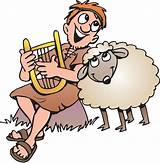
The boy spent his days playing on his shepherd’s pipes or harp and talking to his dog.
But still as he sat in the pasture alone day after day. he grew lonely and bored.

So one day he devised a trick to get some company.
He rushed towards the village ringing his bell and shouting, “Wolf! Wolf!”
Of course, he attracted much attention.
All the villagers dropped what they were doing and rushed out of their houses to run to his aid.
There was no wolf. The boy said it had disappeared. Then he started laughing.
It amused the boy that his plan had worked, and a few days later played the same trick again.
Again, the villagers came running from all directions to give him help.
But again, there was no wolf to be seen.
The boy started laughing loudly once again.
The disgruntled villagers returned to their homes and workshops.
But shortly after, just as the sun was setting behind the forest and the shadows were growing long, a wolf really did come out of the forest.
In panic and terror, the boy ran towards the village crying out for help, but the villagers thought they were being tricked again and they ignored his pleas.
The villagers knew that they had been fooled twice before, and did not want to be taken for fools yet again.
So the wolf attacked the flock and nobody came to help the shepherd.
The moral of the story is, of course, that once you have been proved a liar, it is very difficult to get anyone to believe you.
Bill and Bob said that the shepherd should have got himself a portable computer game to play with, and a mobile phone with lots of apps on it and he wouldn’t have got bored in the first place.
I do see their point.
But I was too tired to explain that those things just weren’t around in Ancient Greece.

*********************
*********************
 Quick Quiz
Bill and Bob wrote the Quick Quiz for me this week.
Nottingham Forest (where Robin Hood used to live) has the nickname of Forest.
But do you know which of these nicknames belong to which football team?
- The Toffees
- The Hammers
- The Gunners
- The Saints
- The Black Cats
- The Tigers
- The Hatters
- The Bees
- The Foxes
- The Potters
lt’s the Weekend!
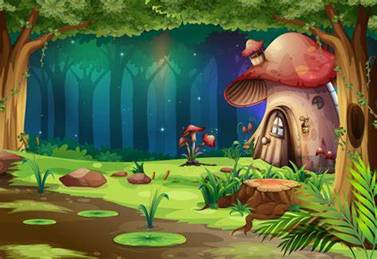
HOW TO MAKE A MATCHBOX FAlRY FOREST HOME
You will need a large empty matchbox – but another similar box will do.
Cover the box with white paper and glue or tape into place.
Then cut a piece of paper big enough to fit inside the inside tray.

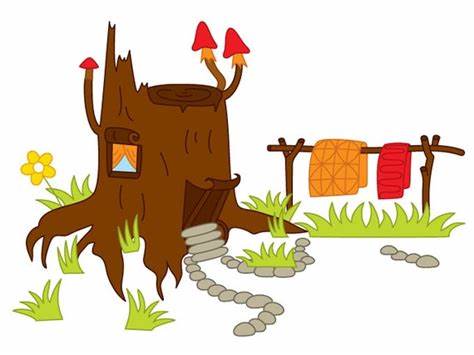
You will need to find a picture of the outside of a house to fit onto the outside of the box – or you can draw one yourself.
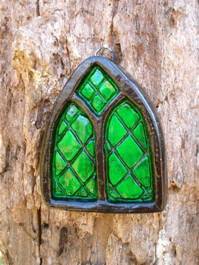
If you are really clever, you can draw windows all the way around.

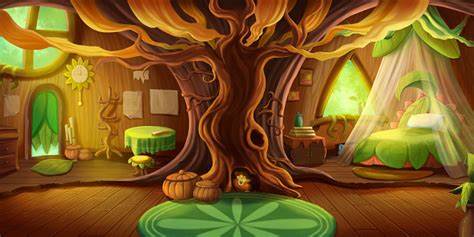
And you will need a picture of a room to fit inside the house and stick it onto the paper you cut to fit inside – or draw one yourself.
You can take a peak inside your fairy forest home any time you like.
Please note that the material on this blog is for personal use and for use in classrooms only.
It is a copyright infringement and, therefore, illegal under international law to sell items made with these patterns.
Use of the toys and projects is at your own risk.
©Christina Sinclair Designs 2015
Quick Quiz Answers
- The Toffees – Everton
- The Hammers – West Ham United
- The Gunners – Arsenal
- The Saints – Southampton
- The Black Cats – Sunderland
- The Tigers – Hull City
- The Hatters – Luton Town
- The Bees – Brentford
- The Foxes – Leicester City
- The Potters – Stoke City