
Salty Sam’s Fun Blog for Children
Number 593
Penicillin
Hello Everyone

Last Saturday morning, Bill and Bob’s mum went to work in her shop, and as she left home, she specifically asked her sons to do the washing up.
They forgot, and went to play in the garden.
Bill and Bob’s dad was working in his office in the attic.
The breakfast things were left on the draining board.
Bill and Bob’s dad made lunch after finishing his work, and then went to watch television.
Bill and Bob went back out into the garden to play.
Bill and Bob’s dad was watching a programme about fishing.
lt was very relaxing.
He fell asleep.
Bill and Bob’s mum came back from work tired.
She walked into the kitchen and saw the mess piled up in the sink and on the draining board.
She went into the garden and yelled those famous words…
“You had one job!!!”
But there is a very famous story about when someone didn’t do the washing up, and the results of that oversight were to be one of the best things that ever happened in human history.
Amazing, isn’t it!
l expect you would like to hear the story…
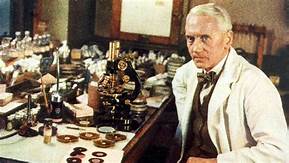
The story is about a man called Alexander Fleming.
He was the scientist who realized how important penicillin could be when used in the field of medicine.
Penicillin was discovered in the 1800s. lt is a kind of antibiotic produced naturally by certain blue moulds.
lf you have ever left an orange in a fruit bowl and notice it develop a powdery, blue-green patch of mould on it, you will know what l am talking about.
Penicillin is now produced synthetically. That means it is man-made in factories.
The importance of penicillin was discovered in 1928, but it was during the Second World War that it became the first antibiotic used by doctors.
Thereafter, it has saved countless lives.
Penicillin was the first effective antibiotic that could be used to kill bacteria that causes disease; some of them can be life-threatening.
During World War l, Alexander Fleming noticed that the antiseptics the doctors were using seemed unable to prevent infections in wounds. He wanted to find something that could kill the bacteria which caused infections like septicaemia – also called blood poisoning.
Blood poisoning happens when a bacterial infection enters the bloodstream and takes toxins around the body. lt can develop very quickly and can be deadly.
Coming into his laboratory one morning after having some time off, Alexander removed the tops from some old petri dishes and noticed that some bacteria he had been growing in them were being killed by a mould. This mould was penicillin.
He decided to use the word antibiotic to describe penicillin.
Petri dishes are small, shallow, clear dishes with lids that are used in laboratories for experiments.
Alexander isolated the mould, and developed it in a fluid so that he could use it in further experiments.
He found that it killed many of the common bacteria that infect humans.
Alexander thought the best penicillin grew on melon skins.
Unfortunately, he did not have the money or facilities to continue his research – although one of his students successfully treated a patient with an eye infection in 1930 by using penicillin.
The research continued in the late 1930s by two scientists in Oxford called Howard Florey and Ernst Chain.
Then in 1939, war broke out again.
The scientists were given money by the government to help them in their work.
They purified the drug and eventually developed it into a medicine that could be injected by using a syringe.
But they were having problems producing enough penicillin.
At first, they conducted trials on mice, and when they were successful, in 1941, they tested the penicillin out on a human. The medicine was effective, but the patient died when they ran out of penicillin to give him.
By 1943, during the height of the war, it was possible to mass produce the penicillin that was needed to give injured and ill people.
Alexander Fleming used penicillin to treat a very dangerous disease called streptococcal meningitis in 1942.
For discovery, development and production of the drug Fleming, Florey and Chain were awarded the Nobel Prize in Physiology or Medicine in 1945.
ln the 1940s and the 1950s, other antibiotics were produced in addition to penicillin.
They have been used in all the decades since.
But it has now been discovered, that the overuse of these medicines in recent years, have made them less effective. They have been used so often for mild infections that can be conquered by the body if left to its own devices, that they are now not as effective on killer diseases.
Therefore, it is best to use them only when you are really very ill.
lf you have a non-dangerous illness like a head cold, you can use hot drinks and rest to help you feel better. Being ill is not nice and not comfortable, but rushing to take a strong cure, could mean that if you are really ill later in life, and the only drug available to help you will not work, you could be in trouble.
And prevention is better than cure.
Regular hand washing keeps your hands clean of infections that you could transfer into your eyes or nose or mouth.
Eating a highly nutritious diet, taking exercise in the fresh air, having enough sleep and having enough rest when you need it, builds up your immune system – and so does sunshine.
Finding anti-stress regimes help to strengthen your physical health too.
Having good health helps your body to fight off infections by itself.
Bye bye everyone – don’t forget to subscribe to my blog!
Love and kisses
Salty Sam

www.christina-sinclair.com
Bill and Bob’s Joke of the Week
Bill: A man went into hospital and the nurse asked him, “Would you like a bed pan?”
Bob: And the man said?
Bill: Do l have to do all my own cooking in here then?
Salty Sam © Christina Sinclair 2015
Unauthorized use and/or duplication of material from this blog without express and written permission from this blog’s author and owner is strictly prohibited.
Links may be used to www.christina-sinclair.com
Picture Gallery
Alexander Fleming

The Nobel Peace Prize
 Preparing a Petri dish

Petri dish with a developing experiment


Modern superbugs fighting antibiotics

Children fighting fit
 THE SALTY SAM NEWS DESK

This week, Miss Pringle gave her class at the Rocky Bay Primary School a very interesting exercise to do.
She said that although it may seem like an art class and an opportunity to practise doing some drawing; it was really also a lesson on practising the art of observation.

She would give them each a tiny escallonia flower and they would have to practise close observation of it in order to draw a good representation of it.
The children marvelled at how a tiny flower from a hedge that you would normally just pass by and take no notice of, could have such an intricate structure!
It was a good lesson in biology too because all the parts of a flower are important to facilitate pollination – which leads to the production of seeds.
And of course, productions of seeds mean more flowers!

Stamens carry pollen and seeds grow in the pistil
Petals attract pollinating insects like bees and hoverflies
They move pollen between flowers to help pollination

A hoverfly

*********************
*********************
 Quick Quiz
Do you know what these words and sayings mean?
- to get blown away by
- serendipity
- a meandering path
- to keep on your toes
- making a rod for your own back
- fulfilling your destiny
- a change of fortune
- to have the courage of one’s convictions
- new money
- to live under Grace

lf it is to be – it is up to me!

lt’s the Weekend!

HOW TO MAKE A WEATHER FORECAST CHART
Well, it is very easy, isn’t it to see what the weather is like outside – and if the weather is bad, you will probably be looking at it through the window from inside!
But you could try forecasting the weather.
Draw up a chart to start with to track your predictions; and see how well you do.
Draw six columns across and rule lines across to make boxes.
- In the first column write the date
- In the second column write the temperature – it need only be words like cold or warm or hot
- In the third column write the wind direction
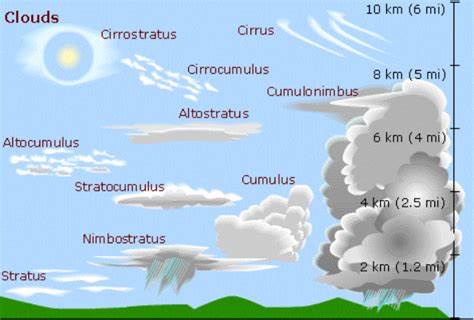
- In the fourth column write the kind of cloud you see in the sky
- In the fifth column write your forecast – or draw a picture!
- In the sixth column you can put a tick if you were right or what the weather actually if you miscalculated – don’t worry even the experts do that! 😉
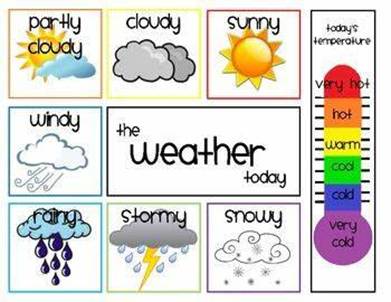
What is your prediction – draw a picture
So how can you make a forecast?
Check the wind direction by holding up a small piece of cloth like a hanky.
Or you can put a little flag on a stick in a jar.
In Britain, the wind direction will give you a good indication of what weather is on its way.
A south wind will bring warm air because it is coming from the Sahara Desert. It will probably hot or warm and sunny with colourful sunsets.
At the moment, there is a heat dome trapped over Europe causing a massive summer heatwave. This heat was brought up from the Sahara Desert.
A west wind will bring rain from the Atlantic. The air will be on the mild side.
A north wind will bring cool temperatures, and snow in the winter from the Arctic.
An east wind will bring very cold temperatures from Russia in the winter, but possibly hot temperatures from the continent in the summer.
This may all be very different in your part of the world!

Some clouds like cirrus and cumulus will indicate fine weather (that means dry/no rain). Cirrus looks like someone has combed them and cumulus look like big masses of cotton wool. They are very high clouds.
Cumulonimbus predicts thunderstorms. They are very tall.
Stratocumulus clouds can bring overcast skies but no rain – in other words a dull day.
Nimbostratus can bring rain. The darker the clouds, the more likely they are going to dump rain out of the bottom of them.
If you look out over the sea you may find that a hazy horizon in the morning predicts a warm day and a sharp one predicts rain.
See if you get better at predicting the weather over time.
Let me know how you get on!
Please note that the material on this blog is for personal use and for use in classrooms only.
It is a copyright infringement and, therefore, illegal under international law to sell items made with these patterns.
Use of the toys and projects is at your own risk.
©Christina Sinclair Designs 2015
Quick Quiz Answers
- to get blown away by – to be really pleased about something
- serendipity – happy happenstance – coming across good things by chance that will benefit you – good things brought to you by destiny
- a meandering path – a path that snakes this way and that
- to keep on your toes – being wide awake and aware of what is happening in a situation – to remain active, alert and focussed
- making a rod for your own back – making life difficult for yourself
- fulfilling your destiny – completing your life’s purpose – doing what you have come to Earth to do
- a change of fortune – your luck changing – could be bad or good
- to have the courage of one’s convictions – to carry on with a project or a situation believing you are doing the right thing without a guarantee of what the outcome will be
- new money – money made recently by people – not inherited from family
- to live under Grace – to trust God’s timing/to trust the Universe knows best/to be guided by Source (through intuition)