Salty Sam’s Fun Blog for Children
Number 611
The Garden Cemeteries of London
Hello Everyone
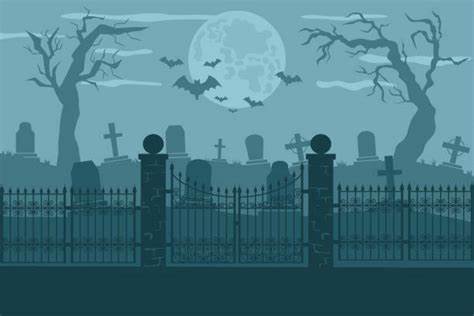
Well, it is Halloween tomorrow, when things get spooky, so this week, l thought l would write about some spooky places that you may not have heard of.
Once upon a time, where London stands now, there used to be lots of little villages and hamlets. (A village has a church and a hamlet doesn’t.)
These little settlements grew larger and larger until they all stuck together and became the sprawling metropolis we know today.
Many houses were constructed when the lndustrial Revolution started to take off. People moved to cities in their droves in the early 1800s to work in the factories there in order to get higher wages.
The population of London exploded, but at the same time because of the unhealthy living conditions in slums and high infant mortality (many children did not reach adulthood) there was also a need for cemeteries too.
There were seven in particular that were especially planned and built by private companies in the countryside around London as garden cemeteries, and are now referred to as the Magnificent Seven.
These garden cemeteries were built from 1833 to 1841.
They have been left as burial grounds and in our modern age are islands of tranquillity in amongst the hurly-burly of busy streets.
They are fragments of countryside that have been left alone by developers.
Some of these cemeteries are more famous than others.
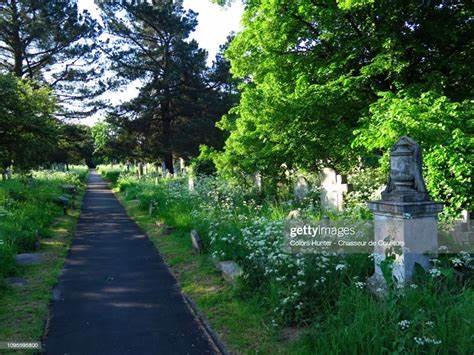
Brompton Cemetery in the west of London was opened in 1840.
Brompton was a small hamlet known for its flower gardens and plant nurseries. The site selected for the new cemetery was flat and featureless. So a special design was selected to attract potential customers.
The first person to be buried there in 1840 was one Emma Shaw who died in childbirth like so many other women of her time.
The design was inspired by classical architecture and the cemetery was laid out as though it were a huge open-air cathedral. lt is in the shape of a cross.
A magnificent entrance opens onto a tree-lined central avenue.
There are classical-style buildings erected within the grounds and a huge, stone circle to encircle some of the graves. There is a domed chapel nearby.
There are mausoleums (small buildings) which house several generations of the same family. They had to be wealthy enough to afford one. Many of these are positioned along the main avenue.
There are underground catacombs (chambers) hidden behind grand, iron gates which held more affordable tombs. Many of these are still left empty.
There are about 35,000 stone monuments dedicated to loved ones lined up over the grounds. The Victorian ones tend to be large crosses, but the more modern ones are simpler and smaller.
There are over 200,000 people buried here, and each death is recorded by hand in a register that has been kept since 1840.
Many famous people were buried at Brompton Cemetery like Emmeline Pankhurst and John Snow, both of whom have been featured in my blog posts.
Although the cemetery is very old, it has not been forgotten; far from it.
Many people go there every day to enjoy the peace that it offers.
They exercise, read, paint, or sit and think. They walk their dogs.
During the week, hundreds of commuters walk through as they use it as a short cut to work – or school.
There are now mature trees which provide shade on hot days. They were planted in memorial of a loved one many years ago – in addition to the 21 species of trees originally planted by the architect.
Tall grasses and many pretty, wild, meadow flowers grow between the graves.
There are many birds and mammals like squirrels and foxes that have made the area their home, and bees and butterflies are attracted in by the trees and flowers.
Everything is looked after by the Royal Parks Department and also some volunteers.
But the most famous cemetery must be Highgate Cemetery in the north of London. This covers a vast area. You have to pay to go in and it is locked up at night. To go around it at night you have to go on a guided tour.
lt has a different vibe.
lt is very shady with very tall trees. Many of the graves are tumbled down and covered in ivy and other undergrowth but many tombs are still standing strong – but just very weathered. People have been buried there since 1839.
People are still being buried here and there are modern tombstones to be seen amongst the old.
This graveyard is also a place where famous people are buried, and there are some war graves as well. The most famous person buried there would probably be Karl Marx. He wrote about his political theories. They are called Marxism. Today people might refer to his ideas as communism.
The cemetery is peaceful and full of birdsong.
Highgate Cemetery is part of the original and ancient Middlesex Forest. Witchcraft ceremonies are and have been carried out here since the beginning of human habitation.
Highgate Cemetery is known as one of the most haunted cemeteries in the world.
Because of its reputation, many ghost hunters want to visit it. But since the 1970s, all paranormal investigations have been banned.
There are lots of stories and even photographs and film of strange apparitions in this dark, Gothic, Victorian cemetery.
And local legend has it that there is a vampire that comes out of it at night and walks the streets and even visits people’s houses.
So if you live in Highgate maybe you can tell me if you have ever seen it?
Ooooooooo!
Bye bye everyone – don’t forget to subscribe to my blog!
Love and kisses
Salty Sam

www.christina-sinclair.com
Bill and Bob’s Joke of the Week
Bill: l heard this story of a prisoner that was hanged, but he didn’t die of choking, he died from a bump on the head.
Bob: How’s that then?
Bill: They used a piece of elastic instead of a rope!
Bob: Oooo!
Salty Sam © Christina Sinclair 2015
Unauthorized use and/or duplication of material from this blog without express and written permission from this blog’s author and owner is strictly prohibited.
Links may be used to www.christina-sinclair.com

Picture Gallery
Bromsgrove
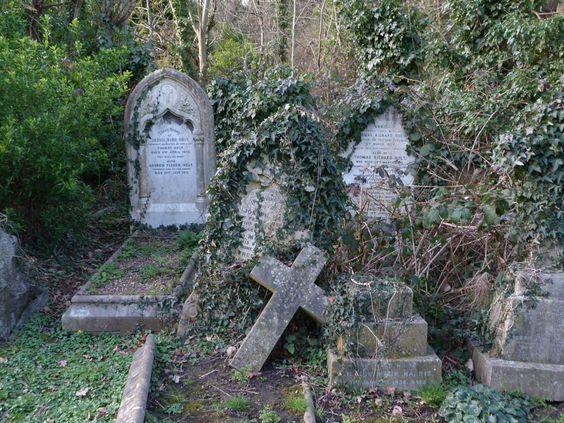
Highgate

Karl Marx
 THE SALTY SAM NEWS DESK


This week, Bill and Bob saw an opportunity to build an even bigger project than the one they built last week.
Their neighbour was having some building work done in their garden and had some paving stones left over.
They asked Bill and Bob’s dad if he could use them, and Bill and Bob jumped in and said that they could use them instead.
They had a plan!
And as usual I got roped in.
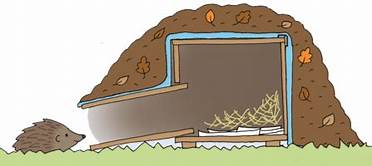
They had heard that hedgehogs like stone houses even better than wooden houses, and decided to build some in Auntie Alice’s garden – right down in the far corner near the woods.
We did not put any in the woods because there are badgers there, and apparently badgers eat hedgehogs, so the hedgehogs are better off staying in the garden, and the garden is sealed off with hedges and fences.

We collected a lot of large rocks, built the layout of a house and put the paving stones on top to act as a roof.
There aren’t any earthquakes in the Rocky Bay Woods as far as I know, but even so, the houses had to be very sturdy and safe because we did not want them tumbling down on top of the hedgehogs once they were inside!
Hedgehogs don’t like a big doorway in the wall of their house, so it is like they are living in a kind of hut.
Instead, they like to have a corridor to go into, or a corner to go round so that their sleeping chamber is really tucked away from draughts and predators.
We were really careful to build strong and appealing homes for the hedgehogs.
I cannot imagine a more desirable residence for any hedgehog out looking for a new abode!
Then we filled them with straw to give the hedgehogs extra protection from the cold.
Some people put earth on the top of the stone chambers to keep the hedgehogs even more snuggly.
Winter is coming and I don’t suppose it will be long before the hedgehogs will be looking for somewhere to hibernate to get away from the cold weather.
Then we went home to make plans for our Halloween party.
Yay!
Happy Halloween!


*********************
*********************
 Quick Quiz
Do you know what these words and phrases mean?
- indigenous
- investing
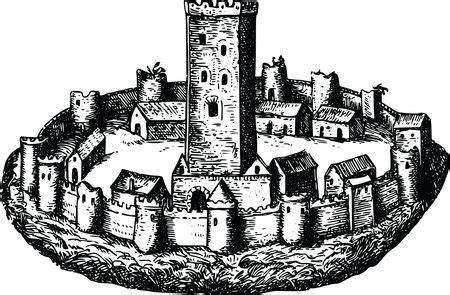
- a fortified city
- vernacular
- a monarchy
- a republic
- the long arm of the law
- a treaty
- a temple
- a judicial system
- a hierarchy
- an egalitarian system

lt’s the Weekend!
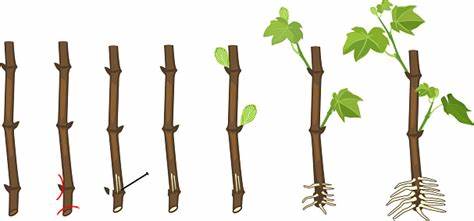
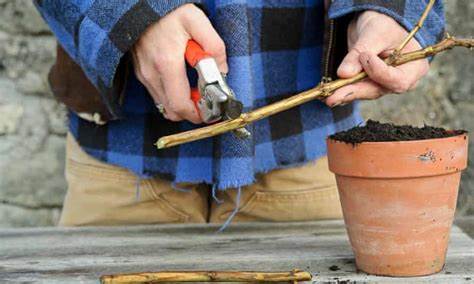
HOW TO MAKE HARDWOOD CUTTlNGS
This is a brilliant idea if you are moving house and you want to take a tree in your garden with you in some way.
It is also a way to make more trees of a certain type – say a rare apple or pear tree. The root stock may be different from the top trunk and branches – take a cutting or three from a branch and you will create replicas of your tree, if you can get them to root.
Hardwood cuttings like these can be taken in winter.
First prepare a pot full of a compost of grit, perlite and peat-free compost. The cuttings must be in free-draining compost.
You need a long stick about 20cm long and maybe leave a couple of leaves at the top – stripping the rest away. Cut under a node.
Push the bottom of each cutting so that about ¾ of the stick is under the compost.
Put the cuttings around the edge of the pot because they like to be next to a wall. This means you can put four or five in a pot as long as it is not too small.
Water the pot like you would any plant, but if you leave it outside you will only have to water if it does not rain for a while.
The following autumn you can check to see if the cuttings have taken.
Any little tree that has rooted can be put in a larger pot by itself and left to grow. These trees can be left outside. They do not need to be kept warm over the winter.
In two to three years, you will have a new tree ready to go out in the garden.
Please note that the material on this blog is for personal use and for use in classrooms only.
It is a copyright infringement and, therefore, illegal under international law to sell items made with these patterns.
Use of the toys and projects is at your own risk.
©Christina Sinclair Designs 2015
Quick Quiz Answers
- indigenous – of a region – like a population of people
- investing – putting time, money or effort into a project or savings scheme
- a fortified city – a city with fortifications has walls and towers that soldiers can man (to help to protect itself from invaders)
- vernacular – of the area – language or buildings (probably made from locally sourced materials like stone or wood)
- a monarchy – a country that has a king or queen
- a republic – a country that does not have a king or queen but a figurehead like a president who is voted for – if you have a dictatorship, one person called a dictator controls the state according to his/her own wishes and has a police force to back him up – in this system free speech is denied and compliance (obedience) is expected and if you don’t obey, you are punished by imprisonment or worse – an there are no elections
- the long arm of the law – if you break the law, the police can find ways to catch you
- a treaty – an agreement between states
- a temple – a place of worship
- a judicial system – a system of having courts of law (with judges)
- a hierarchy – when some things, animals or people are higher/have more authority than others – groups of apes and chickens have hierarchies and a lot of organizations set up by humans have hierarchies
- an egalitarian system – where all people have equal rights and have an equal say in what happens (like a ‘one person, one vote’ system)
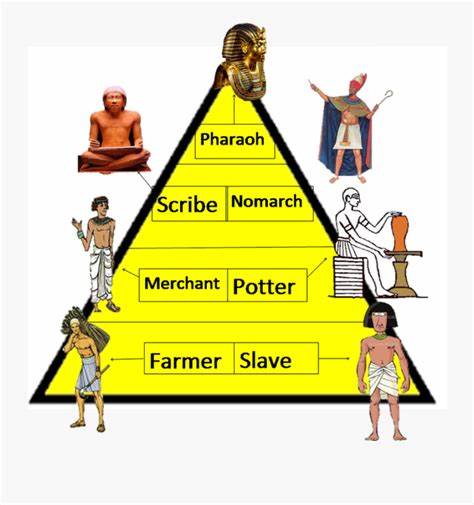
Society in Ancient Egypt
This is a hierarchy

A modern company or organization with managers
who are in charge of people
This is a hierarchy
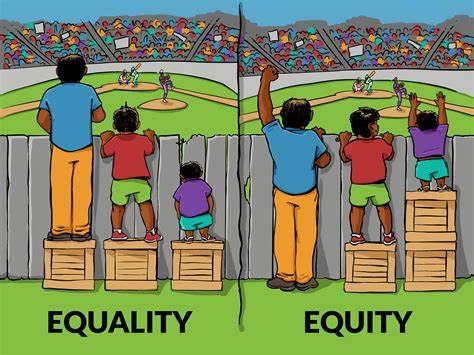
What is your family like?
Is it a hierarchy, egalitarian, a dictatorship?
How do you make decisions as a family?
Do you argue and shout while you are standing up – or sit quietly at the kitchen table, calmly state your case and listen to other people’s point of view – maybe over a hot chocolate or bowl of popcorn?
Can you explain to someone exactly why you are upset with them without getting angry, spiteful and resorting to personal insults?
Do you discuss things with the members of your family and come to an agreement that everyone is happy with because they can understand the good reasons for doing something, not just that they have to do something because they are told to do it?
Can you all decide how you will organize a family celebration or holiday with everyone helping and becoming a part of it?