Salty Sam’s Fun Blog for Children
Number 612
Grace Darling
Hello Everyone
The tourist season is really drawing to a close now and all the stalls, shops, booths and colourful attractions at Sandy Cove are shutting up before the winter storms roll in and give the sea front a battering.
The sea can be a dangerous place and if people get into trouble there are agencies that are readily trained and always on standby to rush to their aid.
The RNLl is a famous charity that has over 400 lifeboats stationed all around our coast.
But this was not always the case.
Through most of history people in coastal communities had to organize themselves to help each other if anyone got into trouble – or they perished at sea.
One famous rescuer was a woman called Grace Darling. Her name has lived down through the years because of a very courageous rescue that she carried out.
She was the first woman ever to receive the British Gallantry Medal.
This is her story…
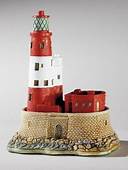
As a child, Grace went to live with her family in the Longstone Lighthouse; a rock lighthouse situated in the North Sea.
The Longstone Lighthouse was built in 1826 after many accidents at sea in the area proved it was needed.
Unusually, for a lighthouse of the time, there was extra space for a keeper to live there with his wife and family. There was lots of downstairs accommodation.
Grace lived a quiet life with her small family, way out in the middle of the sea.
lt was her habit to often row to a nearby island where there was a vegetable garden and chicken coops with egg-laying chickens and geese in order to collect fresh produce and feed the animals.
Then in early September of 1838, at the age of 22, Grace’s life would be changed forever.
As dawn broke one morning, Grace took watch at the lighthouse.
A terrible gale was blowing outside and she saw that a ship out on the sea about half a mile away had run into difficulties.
The SS Forfarshire on its way to Dundee with over 60 people aboard was being tossed violently in the sea.
lts engines had failed and it was unable to steer or maintain its passage.
The captain had lost his bearings and the ship had been forced by wind and waves onto the dangerous rocks nearby.
The ship had hit the rocks and broke in two during the night.
The bow caught on a large rock long enough for some people to escape from the ship.
Most people aboard drowned in the cold, tempestuous sea.
One small group of nine people scrambled into a small boat which drifted away from the wreck and a few others managed to clamber via a rocky ridge jutting into the sea onto a tiny island. lt was really only a small rocky outcrop.
Grace raised the alarm and her father William Darling decided to launch a rescue attempt. Grace could see there were people moving about on Big Harcar rock from the window.
William had a large, heavy rowing boat with massive oars called a coble at his disposal.
lt may have looked big on land but was a tiny vessel when pitted against a raging sea.
ln any case, it needed two to row it, and Grace volunteered to go with him.
Neither of them could be sure that they would ever return to the lighthouse alive.
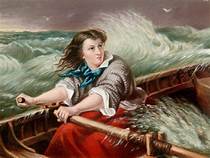
The pair fought their way over to the wreck, battling against wind, rain, strong currents and high waves. They must have been cold and soaking wet. Grace was wearing a heavy Victorian dress which would have been even heavier once drenched in seawater and rain.
The rescuers rowed the boat on the leeward (sheltered from the wind) side of the rocks which meant they had to take a long way round to reach the wrecked ship – it meant nearly a mile of hard rowing.
Nearing the island was even trickier to attempt. They had to get the boat near enough to the people for them to climb aboard – without dashing the boat onto the rocks in the process.
The people could not be left on the island until the weather got better because hypothermia was beginning to set in. Hypothermia means getting so cold that it becomes a medical emergency which, if left to continue can cause death.
By the time father and daughter got to the rocky island, three people had already died, and it was a race against time to get the nine remaining castaways back to the lighthouse.
William jumped out of the boat and onto the rock leaving Grace to handle the boat alone. She had to use both oars to row it backwards and forwards just to keep it steady and in one place and not be smashed by the rocks.
William found eight men, one of them badly injured and a woman still alive.
But the boat could not take all nine people; some had to be left behind on the island.
The boat had room for five passengers. A woman, an injured man and Grace were rowed back to the lighthouse by William and three men.
Mercifully, Grace, William and the handful of people they rescued made it back safely to the lighthouse.
Then William returned to the island with two of the crew from the ship to collect the four men who had been left behind, whilst Grace stayed in the lighthouse. There, she and her mother looked after the people who had been rescued.
William and the rest of the survivors arrived safely at the lighthouse some time later, and there they all stayed until the gale had calmed.
A lifeboat came out from the town of Seahouses on the north-east coast of England, but it was only able to retrieve the three bodies from Big Harcar rock.
The lifeboat could not make it back to shore because the weather was so bad, so the crew rowed over to the lighthouse instead and stayed there for a further three days.
And if you are wondering what happened to the lifeboat, you will want to know that, happily, the nine people who had managed to get into that small boat were picked up by a ship and taken to the mainland.
Soon, news of the daring Darling rescue was brought to public attention, and Grace became a celebrity overnight.
She was awarded medals and Queen Victoria sent her £50.
She was sent letters, presents, lots of money and even marriage proposals!
People were very proud of her and admired her bravery and achievement.
But all the attention and fame became overwhelming. lt was not at all what Grace was used to, and she was constantly bothered by admiring fans who recognised her portrait from papers and magazines.
Sadly, only four years later, Grace contracted tuberculosis (a lung disease) whilst visiting the mainland and died at the age of only 26.
Her memorial overlooking the sea in St Aiden’s churchyard in Bamburgh is a large and impressive one.
Hundreds came to her funeral.
The RNLl have a museum dedicated to her, and it contains the very boat she and her dad used to launch the rescue.
The RNLl was established in 1824, and although its reach was patchy at first, it grew to become a service with comprehensive coverage of the sea around our shores.
There is a unique list of all the rescue boats the RNLl have operated, and all the ships those boats have collected crew and passengers from in rescues up on the walls inside each lifeboat station.
RNLl crew members go through days of training at a special RNLl college. They have to be both mentally and physically tough.
Our seas can still be very dangerous at times, and these men and women still risk their lives trying to save others when they get into trouble.
The RNLl is one of the top charities that people donate to every year.
ln 2022, a garden was designed on behalf of the RNLl at the Chelsea Flower Show; it contained a large meandering path and every slab set into it represented a life lost.
lt was a large path.
Bye bye everyone – don’t forget to subscribe to my blog!
Love and kisses
Salty Sam

www.christina-sinclair.com
Bill and Bob’s Joke of the Week
Bob: l know why Guy Fawkes attempt to blow up Parliament failed.
Bill: Why did it fail?
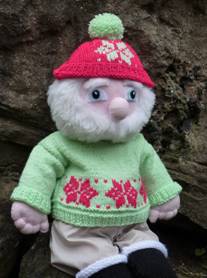
Bob: ‘Cos his body was made of old jumpers and his head was a football!
Salty Sam © Christina Sinclair 2015
Unauthorized use and/or duplication of material from this blog without express and written permission from this blog’s author and owner is strictly prohibited.
Links may be used to www.christina-sinclair.com
Picture Gallery
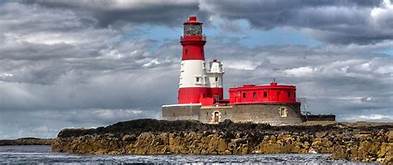
Longstone Lighthouse
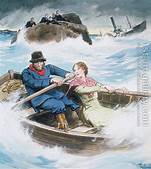
Grace and her father
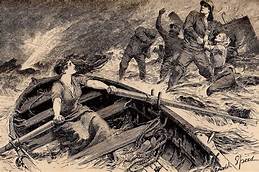
Survivors clinging to the rocks
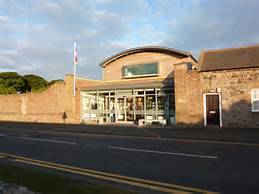
The Grace Darling Museum
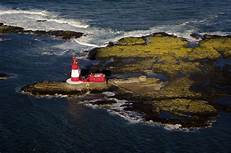
Longstone Lighthouse surrounded by rocks
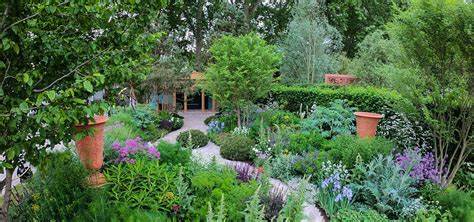
The Chelsea garden
 THE SALTY SAM NEWS DESK


Wouldn’t it be great if I could put a giant Catherine wheel on my lighthouse!
All the people on the Rocky Bay sea front would have a wonderful display of fireworks out to sea, wouldn’t they?

Yay!

*********************
*********************
 Quick Quiz
Do you know what these words and saying mean?
- choppy waters
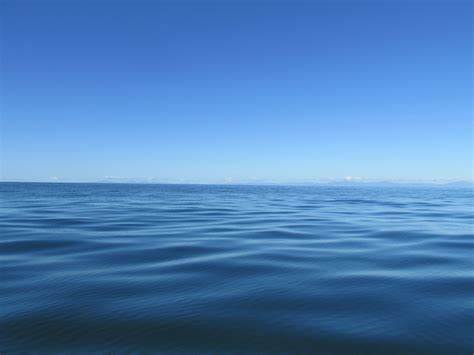
- as calm as a millpond
- rough seas ahead
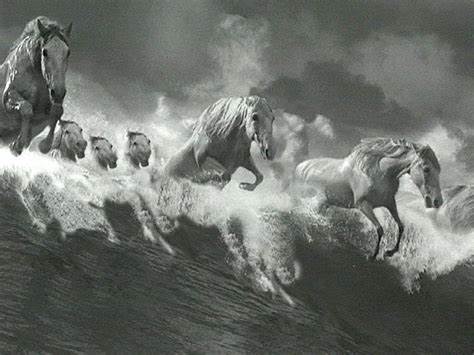
- white horses
- hot springs
- still waters run deep
- to be in flow

lt’s the Weekend!

HOW TO MAKE A BATH LOLLY
Do you like to make gifts for your friends?
This is a recipe for a bath lolly – you will need a decorated paper cup and a lolly stick.
You will also need a mixing bowl to mix your ingredients in.
They will be…
8 tablespoons baking soda
3 tablespoons cornstarch
2 tablespoons Epsom salts
1 teaspoon dried flower petals like rose or lavender
4 drops essential oil
4 drops food colouring
You may want to add some food glitter too
You may also want to wear protective gloves when you mix your ingredients and handle them.
Then pack the ingredients into the cups and push a lolly stick into the centre of each cup and leave to set overnight and store in an airtight container.
To use your lolly, you have to ease it out of the cup and swirl around in your bath water.

Please note that the material on this blog is for personal use and for use in classrooms only.
It is a copyright infringement and, therefore, illegal under international law to sell items made with these patterns.
Use of the toys and projects is at your own risk.
©Christina Sinclair Designs 2015
Quick Quiz Answers
- choppy waters – speaking literally = a sea with small waves or speaking figuratively = being in difficult times
- as calm as a millpond – when the sea has no movement on it at all, which is quite rare
- rough seas ahead – speaking figuratively = problems in the future
- white horses – the crests that form on top of the waves
- hot springs – water that comes up from the ground and is heated by the Earth’s warm core
- still waters run deep – quite people who think deeply about things but don’t talk a lot
- to be in flow – to progress in life in neither a state of stress nor boredom