Salty Sam’s Fun Blog for Children
Number 579
Life on Earth
Hello Everyone

Spring is beginning to show itself in Rocky Bay.
Fresh green leaves are breaking through, and this is the same over the whole of the northern hemisphere. At the same time, autumn is coming to the southern hemisphere as the Earth continues its orbit around the Sun.
These patterns have continued since Earth took up its orbit many millions of years ago. Our moon keeps our home planet stable so that we have regular seasons and it also controls the sea tides.
Life evolved on Earth to be a huge variety of species of plants, fungi, insects, birds and animals – so many in fact that they have not all been discovered yet, let alone named.
We live on a very rare planet to have all this life.
Most other planets cannot sustain life, and the more scientists study other planets with their telescopes and space probe, the more they realise this is a very special planet.
There are about 300 billion stars in just our galaxy (The Milky Way). And of the planets observed so far, scientists have not found any planets orbiting them to hold life like this one does. Some might hold life, but it will be different from our planet.
Almost all the stars have a system of planets orbiting them, but in most of those systems there are planets closer to their star than we are to ours, and they are usually much bigger than our world, and they have a poisonous atmosphere.
Scientists call these enormous planets ‘super worlds’.
Each planet is made up differently from matter, and has an atmosphere with its own characteristics.
Scientists have discovered that places like our Earth are extremely rare; which of course means it is all the more important to look after what we have.
Do they believe that there is life on other planets?
Well, yes because there are just so many in so many galaxies in the universe, chances are that there is. But it is unlikely to be exactly like the life we have here.
They think that there could be about 20 billion other planets that have life on them. (But l think that is a very rough guess!)
They continue to observe and make discoveries.
Scientists know more about our solar system than any of the others they study.
Why is there life on Earth when there is none on other worlds of our solar system?
Well, first of all, we are a distance from the Sun which means we have heat, but not too much.
We have an atmosphere that we can breathe and which protects us from harmful radiation from the Sun. The atmosphere above our heads is only about 100km thick.
We have fertile soils and plenty of water.
The Sun heats the surface of the planet and causes the weather patterns which affect our lives. The Sun gives us light.
ln our solar system, we have four inner rocky planets: Mercury, Venus, Earth and Mars.
Then there is an asteroid belt which spins in its own orbit. These asteroids are lumps of rough rock left over from a time when the planets in our solar system were formed. They are of varying sizes but not big enough to be called planets. They are very spaced out with thousands of miles between each of them.
Beyond the asteroid belt are to be found the two gas giants: Jupiter and Saturn.
And then even further out are the ice planets Uranus and Neptune; each a beautiful blue colour.
Some of the planets in our solar system have moons. There are hundreds of moons of varying sizes. But no other planet or moon in our solar system has been found to have life on it anything like here on Earth.
They may have toxic atmospheres, extreme heat or cold, or a surface of hundreds of constantly active volcanoes, massive ice sheets or desolate, barren, rocky wastes.
Jupiter is the biggest plant in our solar system by far; being 320 times the bulk of Earth and 2½ times all the other bodies in the solar system put together.
Jupiter was the first planet in our solar system to be formed as it broke off as part of the Sun many millions of years ago.
lt has been in its present orbit just outside the asteroid belt for 4 billion years.
lt does a good job of protecting the inner planets from being bombarded by asteroids because of its large gravitational pull. lts gravitational pull is less than that of the Sun, but stronger than any other planet in our solar system.
Jupiter keeps millions of asteroids orbiting in the asteroid belt and away from us!
Sometimes if asteroids wander in from outer space, Jupiter pulls them into itself before they can reach us.
Scientists believe that Jupiter had a huge effect on determining the fact that there is life on Earth too.
Before its present orbit, Jupiter wandered in closer to the Sun, but was then pulled out again by the newly formed Saturn. Saturn is younger than Jupiter and has less gravitational pull but could still have an influence on it.
As Jupiter was pulled away from the Sun under the influence of Saturn, it deposited many water-rich asteroids and icy comets into the Earth’s surface. This abundance of water created our seas.
Without water, life on Earth cannot exist.
Sea creatures live in salt water, but water taken from the seas through evaporation and formed into rain clouds is not salty. Therefore, rain water is not salty.
Rain waters plants and forms lakes and rivers. Fresh water fish and land plants cannot usually tolerate salty water.
So we have salt water plants and creatures, fresh water plants and creatures and life on land that needs fresh, clean water to live. So when you have a drink of water, it is, in a way, comet juice!
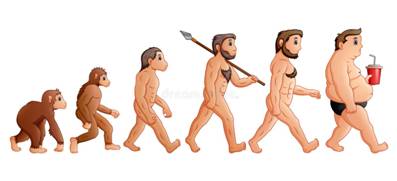
The first life on Earth originated in the sea. The ingredients were there for creating life, water, minerals and gases. The first organisms were simple and tiny.
These primitive organisms become more complex over a very long time.
lt took many millions of years for sea creatures come up onto land, and then many more millions to evolve as it is today – and humans really are a relative newcomer in the world of nature.
Bye bye everyone – don’t forget to subscribe to my blog!
Love and kisses
Salty Sam

www.christina-sinclair.com

Bill and Bob’s Joke of the Week
Bob: What do you get when you cross a dog with an octopus?
Bill: A visit from the ethics committee and immediate withdrawal of your government funding!
Salty Sam © Christina Sinclair 2015
Unauthorized use and/or duplication of material from this blog without express and written permission from this blog’s author and owner is strictly prohibited.
Links may be used to www.christina-sinclair.com
Picture Gallery

The order of the planets
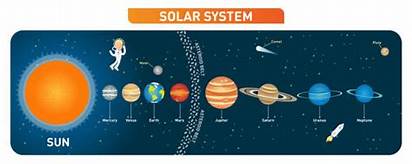
The asteroid belt is between Mars and Jupiter

Jupiter

Our planet is 70% ocean
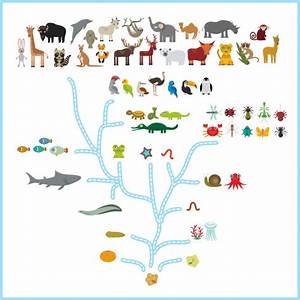
A brief overview of the evolution of life on Earth


Without pollinating insects
We would not have the variety of plants that we have

 THE SALTY SAM NEWS DESK

My Auntie Alice is the calm centre of our family.
She is always there to give wise counsel and a sympathetic ear. Everyone goes to her with their problems, and she is always ready to step in and help out when life gets too hectic for anyone in the family to cope with.
So when she went away last week for a few days to look after a friend who had just come out of hospital, it left quite a hole.
Captain Jack said that he would stay at her cottage for the week and look after all her animals. They needed to be fed, and Sausage, her dog, needed to be walked. Both Sausage her dog and Biscuit her cat get lonely if they are left, and Auntie Alice really couldn’t take them with her.
Captain Jack runs boat trips round the lighthouse in tourist season. In the winter, he services his boat, and sometimes has to repaint it or re-varnish some of the woodwork. But tourist season hasn’t started yet and he thought he had plenty of time to help Auntie Alice out.
So Captain Jack brought round his suitcase and settled himself into an armchair to read the paper. Little did he know at the time, that there was a note left for him on the kitchen table.
The cottage seemed very quiet after the hurly-burly and comings and goings of Mrs Miggins’ lodging house.
When he woke up in the morning, he could hear the wind in the trees, and birdsong, instead of the lapping of the sea against the harbour wall and the cry of seagulls.
That first morning, he took Sausage for a walk and they both got wet in the rain.

They came in the kitchen door, and before Jack had a chance to rub Sausage down with a warm towel, he had shaken himself and sprayed the kitchen with water.
The water splashed all over the kitchen table and onto a piece of paper that Auntie Alice had left there.
Then he realized it was a list of things that Auntie Alice had left for him to do.
When he found it, he realized that he wasn’t going to be bored!
There were a lot of things that he had to do.
But the water that had splashed off Sausage’s coat had blurred some of the ink on the list and made it very difficult to read. There were missing words.
Then he called me to ask if I could go round to help with everything, and of course I said yes.
Salty Sam to the rescue!
Can you see what it was we were left to do?
LIST OF THINGS TO DO
- Cl _ _ n out the g _ _ _ _ _ s
- P _ _ _ t the w _ _ _ _ w f _ _ _ _ s
- Replace the w _ _ _ _ r on the outside t _ p
- M _ _ the l _ _ n
- W _ _ _ r the p _ _ _ _ s in the g _ _ _ _ _ _ _ _ e
- S _ _ _ p the c _ _ _ _ _ y
- Give S _ _ _ _ _ _ a b _ _ h


*********************
*********************
 Quick Quiz
Which animals…
- are traditionally said to howl at the moon
- box in the springtime
- are called the ship of the desert
- have babies called fawns
- are flying mammals that go out at night
- have antlers
- are called man’s best friend
- are Britain’s only venomous snake
- have babies called cygnets
- are a small bird and also a nick-name for women in the navy
- relate to the words equine and bovine
- have colourful wings and symbolize transformation
lt’s the Weekend!

HOW TO MAKE A PATCHWORK BAUBLE
Do you have any scraps of Christmas-themed fabric?
Fabric with a small surface pattern design is best for this project.
Cut six pieces of interface fabric 4cm square and six pieces of patterned fabric 6cm square.

Fold the larger squares around the smaller squares and tack into place.

Sew a loop of very narrow ribbon into a corner of one square. The ribbon should be about 20cm long.
Over-sew the edges of the squares wrong sides together to form a cube leaving a small gap next to the loop. Make your stitches, small, neat and even.
Stuff the bauble and then close up the gap with more stitching.
The cube will become round once stuffed.
Then pull out your tacking stitches.

Or you could use plain fabric and embroider a simple design onto the centre of each square. Use a design like a daisy that will look the same whichever way it ends up. You could put French knots into the middle of it.
You could use greens and reds to make the design look Christmassy.

Please note that the material on this blog is for personal use and for use in classrooms only.
It is a copyright infringement and, therefore, illegal under international law to sell items made with these patterns.
Use of the toys and projects is at your own risk.
©Christina Sinclair Designs 2015
Answers to the News Desk Quiz
- Clean out the gutters
- Paint the window frames
- Replace the washer on the outside tap
- Mow the lawn
- Water the plants in the greenhouse
- Sweep the chimney
- Give Sausage a bath
I am sorry to have to tell you, that we made a bit of a mess cleaning the chimney and then had to wash the dog anyway!
That last item didn’t need to be on the list!
Shhh! Don’t tell Auntie Alice!

Quick Quiz Answers
- are traditionally said to howl at the moon – wolves (only in folklore)
- box in the springtime – hares
- are called the ship of the desert – camels
- have babies called fawns – deer
- are flying mammals that go out at night – bats
- have antlers – deer
- are called man’s best friend – dogs
- are Britain’s only venomous snake – adder
- have babies called cygnets – swans
- are a small bird and also a nick-name for women in the navy – wren
- relate to the words equine and bovine – horses and cattle
- have colourful wings and symbolize transformation – butterflies

A wren
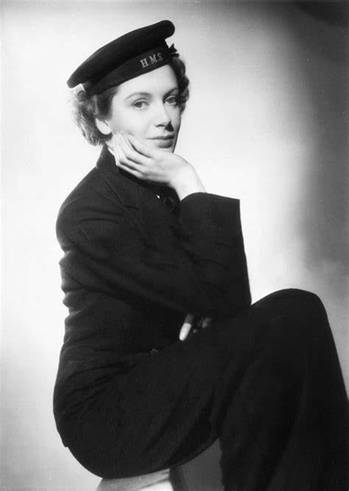
A wren
(Woman’s Royal Naval Service)
This was integrated into the Royal Navy in 1993